
Sunroom vs screened porch vs pergola: which works best in Charleston?
For most Charleston-area homes, a screened porch is the cheapest way to get a roof over your head and keep mosquitoes out. A sunroom costs the most and is the only one you'll use comfortably in August and January, because it's built like a room addition. A pergola gives shade, not rain cover, in a city that averages about 52.48 inches of rain a year.
The sunroom vs screened porch Charleston decision comes down to how much rain you want to keep off, how many bugs you want to keep out and how many months a year you plan to sit out there. A pergola is the third option, and it's the one people pick when they want shade over a deck or patio without the cost of a roof.
American Custom Exteriors builds all three from our Summerville office and works across Charleston, Berkeley and Dorchester counties. Here's how each handles Lowcountry weather, permits and price.
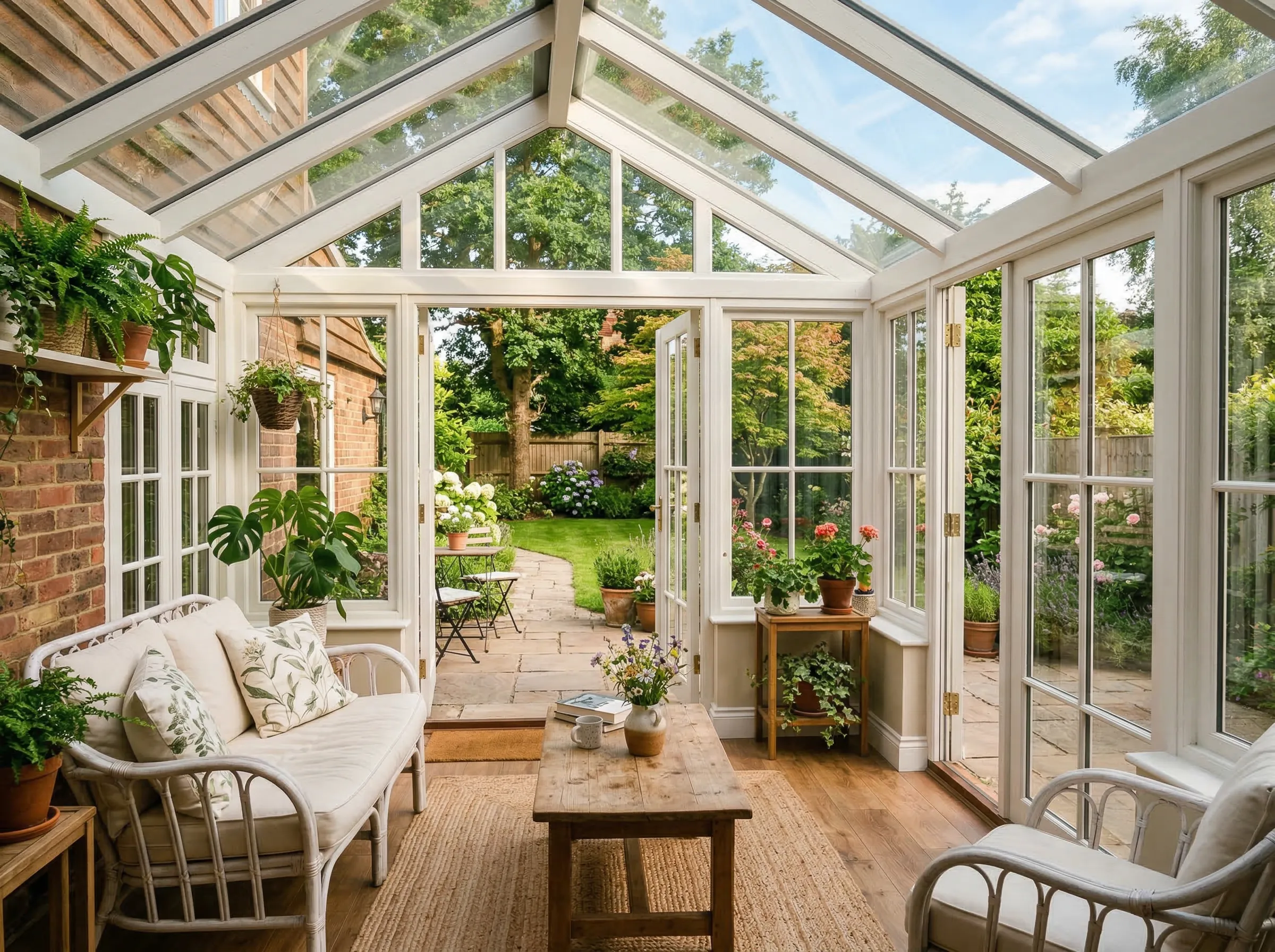
How Charleston's weather decides between a sunroom, screened porch and pergola
Rain and bugs decide most of it. NOAA's 1991 to 2020 normals for Charleston International Airport put yearly precipitation at about 52.48 inches, and August is the wettest month at about 7.0 inches, according to Extreme Weather Watch's monthly rainfall table. That's the same month you'd most want to be outside in the evening, and it's also peak mosquito season.
Summer rain and humidity
Lowcountry summer storms tend to roll in during the afternoon. An open pergola does nothing for you then, while a screened porch or sunroom keeps the furniture dry. If you want to sit out after 3 p.m. in July and August, you need a roof.
Mosquitoes and no-see-ums
Marsh-side lots in James Island, West Ashley and Mount Pleasant get both mosquitoes and no-see-ums, and no-see-ums are small enough to pass through some standard screen. A pergola gives zero bug protection. A screened porch handles mosquitoes well, and a finer mesh helps with no-see-ums. A sunroom with closed windows keeps everything out.
Mild winters
Charleston winters are short, so a screened porch with an outdoor fireplace gets used more months here than up north. That cuts into the main advantage of a four-season sunroom.
Salt air on the islands
On Isle of Palms, Folly Beach, Sullivan's Island and Kiawah Island, salt air works on fasteners, screen frames and hinges. Galvanized steel corrodes faster than aluminum close to the beach, so ask what the brackets, post bases and fan hardware are made of.
What does a sunroom get you in Charleston?
A sunroom gets you a glass-walled room you can use most or all of the year, with full rain and bug protection. It's the most expensive of the three because it's built like a home addition: foundation, framed walls, a roof tied into the house, windows or glass panels, and a permit with structural review. Our sunroom installation work in Charleston follows that addition-style process.
Three-season vs four-season
A three-season sunroom has single-pane glass or vinyl windows and no heating or cooling. It works in spring and fall and gets hot in a Charleston summer. A four-season sunroom has insulated walls, insulated glass and a heating and cooling source, so it behaves like any other room. Here, the cooling plan matters more than the heating plan.
Glass and HVAC questions to ask
Ask for the U-factor and Solar Heat Gain Coefficient (SHGC) on the glass, and whether it's Low-E. A lower SHGC keeps more sun heat out, which matters most on a west- or south-facing sunroom. Then ask how the room gets cooled: extended ductwork or a ductless mini-split.
Built like an addition, permitted like one
A four-season sunroom usually counts as conditioned living space, which can affect your tax assessment and insurance. It needs a foundation sized for the load and a roof tied into the house framing, which puts it closer to a room addition than a deck. Our general construction team handles the foundation through the finish work.
"American Custom Exteriors is a fantastic company to work with! They recently completed a home addition for me — a dedicated home theater and gaming room — and handled everything from the foundation to the final interior."
Charles Garcia, Google review
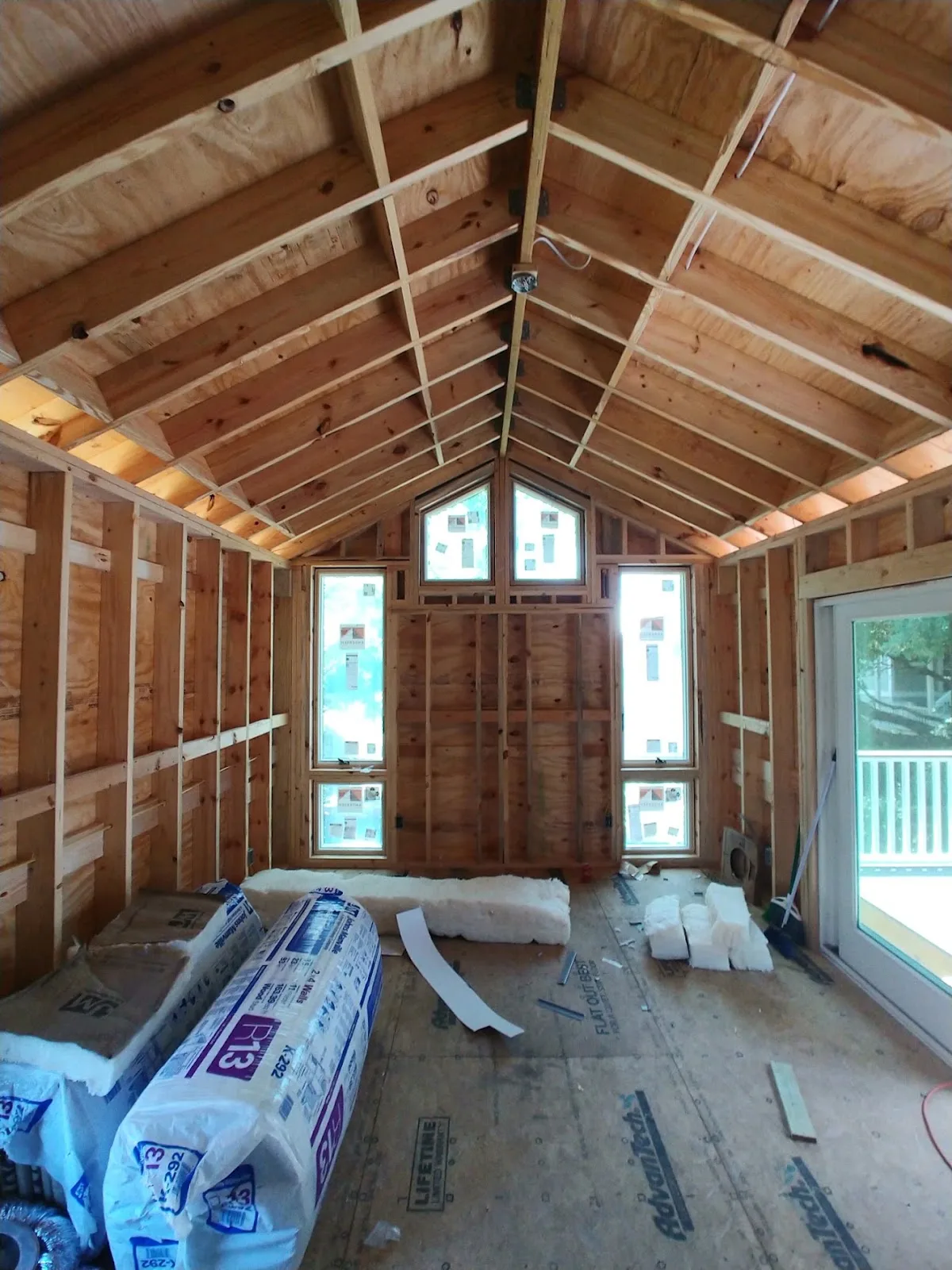
Is a screened porch the best value for Lowcountry rain and bugs?
For most households, yes. A screened porch gives you a real roof and bug protection for much less than a sunroom, because there's no glass, no insulation and usually no heating or cooling. The trade-off is that it's still outdoor air: hot in August and damp on humid days.
Bug control that actually works
Gaps matter more than mesh price. Mosquitoes find the space under a screen door and along the floor line. Ask whether the door has a sweep and a closer, and whether the mesh is fine enough for no-see-ums. A tight porch with standard mesh beats a loose porch with expensive mesh.
Roof tie-in to the house
A shed roof that ties in under the existing eave is simpler than a gable roof that ties into the main roof plane. Either way, the flashing at that joint is where leaks start, so ask who does it and whether shingles or metal will match the house.
Ceiling fans and flooring
Plan at least one wet-rated ceiling fan; it keeps mosquitoes off you and makes an August evening bearable. For flooring, you can screen in an existing deck, pour a slab or tile over concrete. If your deck boards are soft at the ledger or post bases, fix that first; our guide on whether to repair or replace a Charleston deck walks through the checks.
A screened porch sits inside our outdoor living work across the Charleston area, often combined with a deck, a fan and a fireplace or grill area.
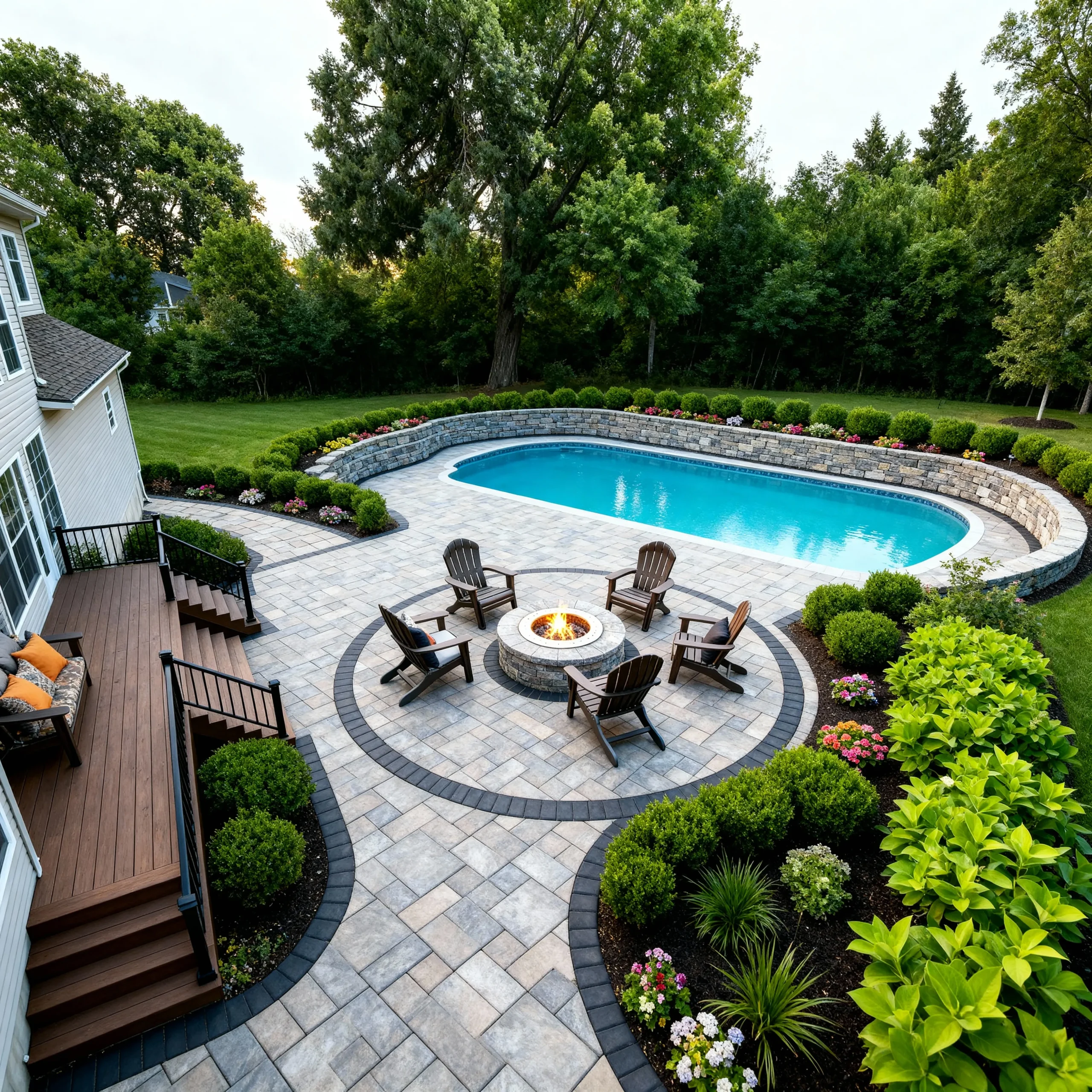
What a pergola builder in Charleston SC can and can't give you
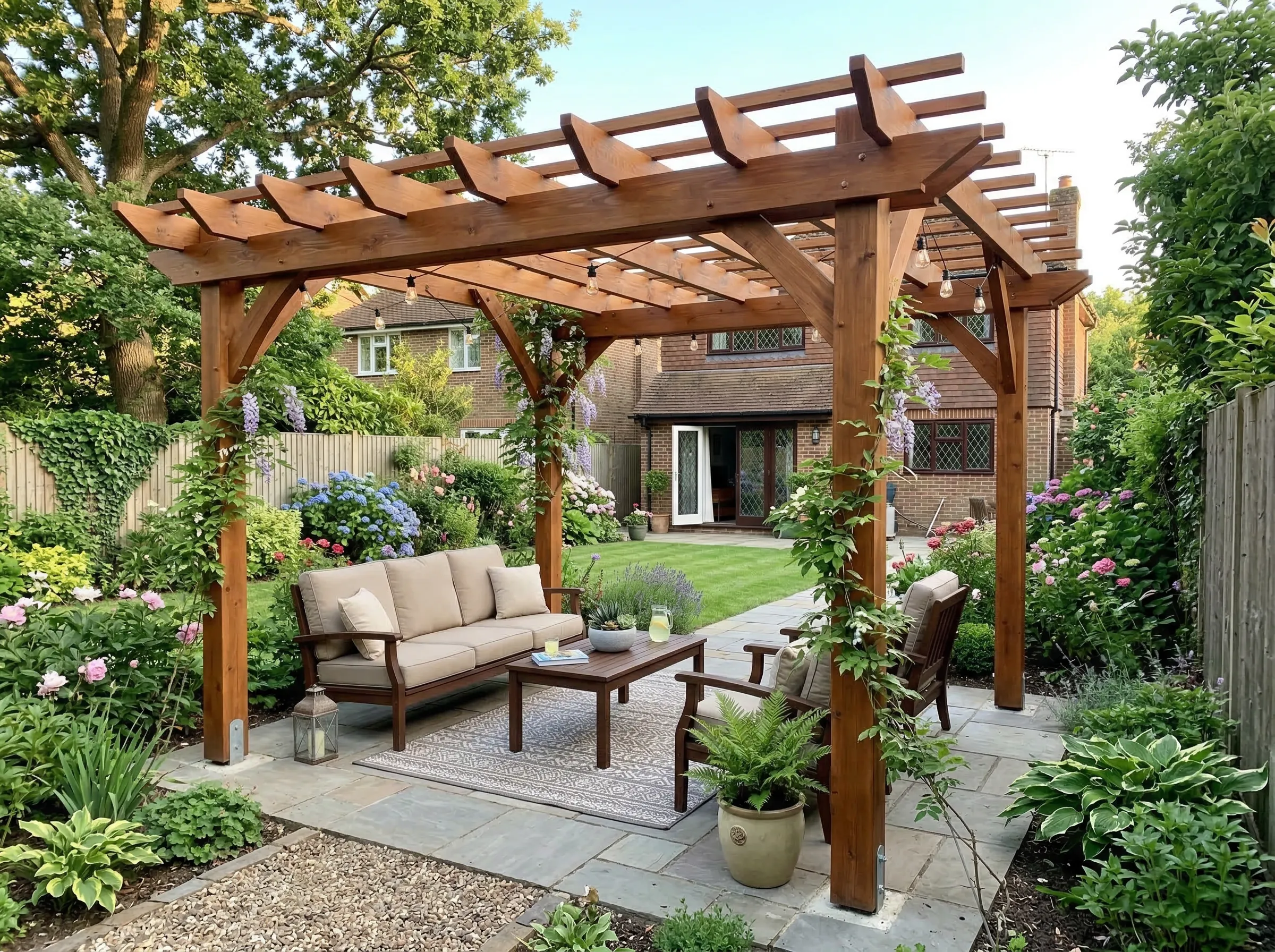
A pergola gives you partial shade, a defined outdoor room and a place to hang lights and fans. It doesn't keep rain off or bugs out unless you add a louvered roof or a solid cover. It's usually the lowest-cost structure of the three, and it's the one that pairs most easily with an existing deck or patio. Our pergola builds in Charleston cover attached and freestanding designs.
Shade vs rain cover
Open rafters cut direct sun and do nothing in a downpour. A louvered aluminum roof opens for air and closes for rain. A solid cover such as polycarbonate panels turns a pergola into a covered patio, and then it carries the same wind and permit questions as a porch roof.
Wood vs aluminum vs vinyl
Pressure-treated pine is the cheapest, but it needs sealing or paint and termites eat it. Cedar costs more and weathers to gray. Aluminum doesn't rot and is the usual base for louvered roofs. Vinyl needs little upkeep but limits spans and colors.
Attached, freestanding, or over a deck
An attached pergola connects with a ledger board, like a deck, and that ledger can't go on brick veneer. A freestanding pergola needs bigger footings because it can't lean on the house. For covered patio ideas in Summerville, a louvered pergola over an existing slab gets shade and rain cover without a roof tie-in. Over a deck, the posts have to land on framing sized for them.
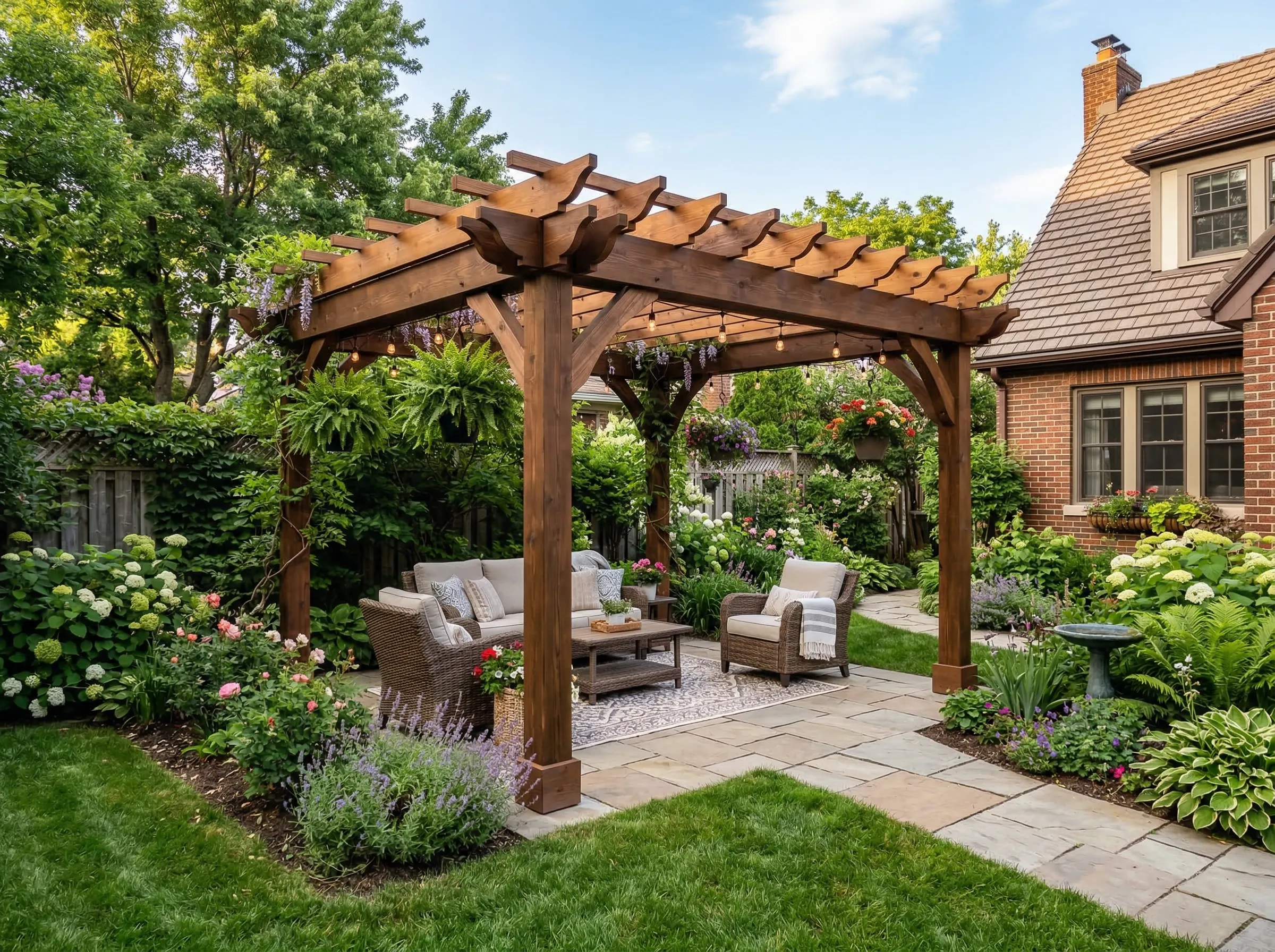
Sunroom vs screened porch Charleston comparison table
A sunroom wins on year-round use, a screened porch wins on value for rain and bugs, and a pergola wins on cost and flexibility. The table below compares them on the six things homeowners ask about most.
| Question | Sunroom | Screened porch | Pergola |
|---|---|---|---|
| Rain cover | Full | Full | None with open rafters; partial or full with louvers or a solid cover |
| Bug protection | Full with windows closed | Good; depends on mesh and gaps | None |
| Year-round use | Four-season: yes. Three-season: spring and fall | Most of the year; hot in August, cool in January | Dry, mild days |
| Permit scope | Addition-level: foundation, structure, often HVAC and electrical | Roof structure, footings, electrical for fans | Footings and attachment; more if it gets a solid roof |
| Upkeep | Glass cleaning, seals, HVAC service | Screen repair, fan cleaning, roof and flashing checks | Sealing or paint on wood; little on aluminum |
| Best for | Home office, year-round sitting room | Evenings, kids, pets, bug-heavy lots | Shade over a deck or patio, budget-first projects |
Morning coffee
An east-facing screened porch gets morning sun before the heat builds, and the screen keeps no-see-ums off at dawn.
Entertaining
A pergola over a large deck gives the most floor area per dollar. For evening parties between May and September, a screened porch keeps guests from getting bitten.
Kids and pets
Screened porches are the usual pick. Ask for pet-resistant screen on the lower panels and a kick plate at the base.
Home office
Only a four-season sunroom works. A three-season room will be too hot by mid-morning in July.
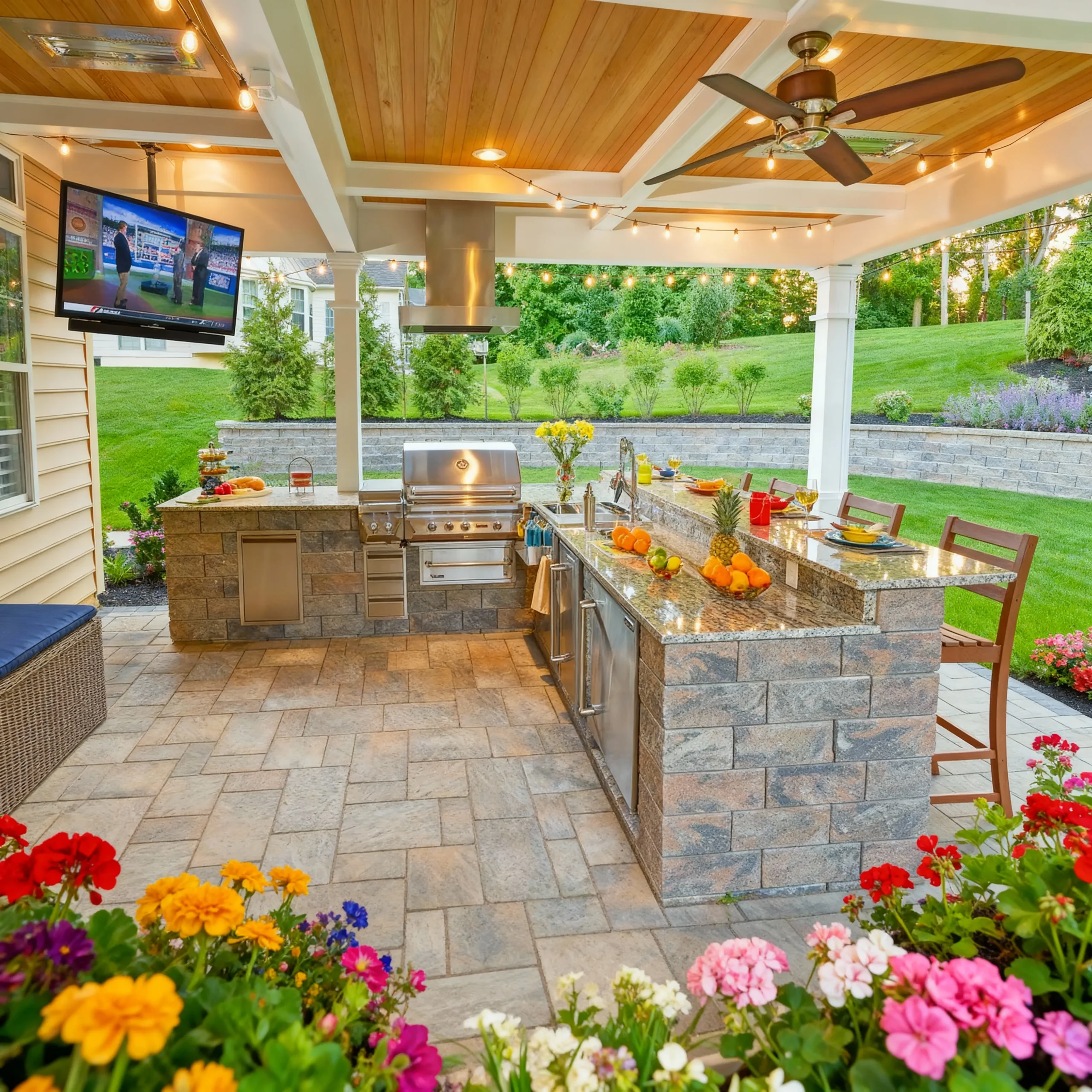
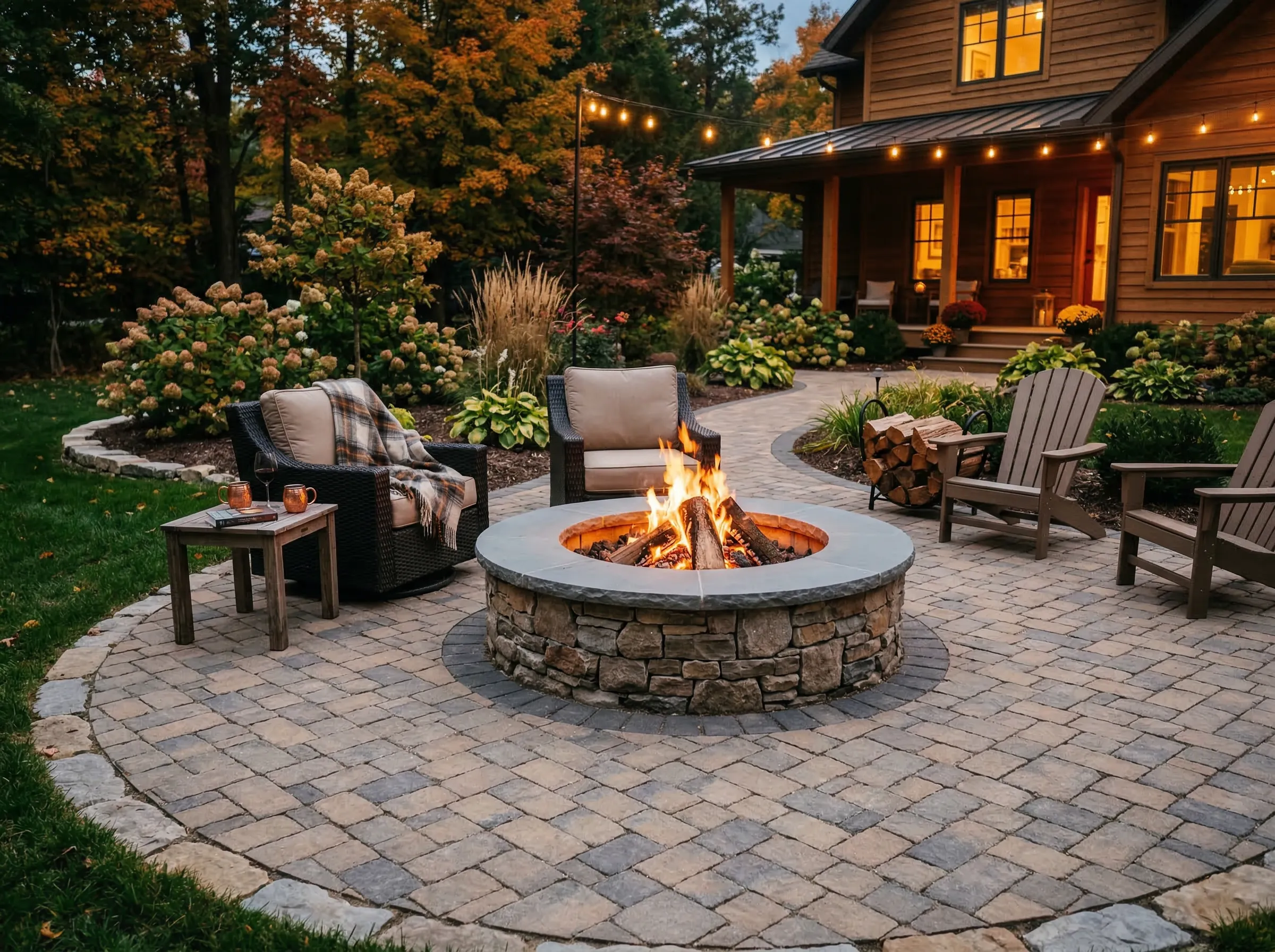
Adding an outdoor kitchen or fireplace to each option
An outdoor kitchen or fireplace adds use to all three options, but each one changes the plan. A grill or fireplace under a roof needs venting and clearance to combustible materials, and gas appliances need a properly run gas line. Your local code and the appliance manufacturer's instructions set the exact distances, so get those numbers in writing before framing.
Under a pergola
An open pergola is the easiest place for an outdoor kitchen in Charleston, because smoke escapes through the top. Keep the grill clear of wood rafters.
Inside a screened porch
Under a solid roof, smoke and grease build up at the ceiling, so the grill goes just outside the screen wall or under an outdoor-rated vent hood. An outdoor fireplace in the Lowcountry often sits at one end of a screened porch with its own chimney.
Next to a sunroom
Cooking inside a sunroom brings indoor ventilation rules, so the outdoor kitchen usually goes on a deck just outside the doors. See our outdoor kitchen work in Charleston and our outdoor fireplace builds for layouts that pair with each option.
Do I need a permit, and what does wind code require?
Almost always, yes, for a sunroom or a screened porch, and often for a pergola. The permit comes from whichever jurisdiction your home sits in: the City of Charleston, North Charleston, Mount Pleasant, Summerville, Goose Creek, or the county for unincorporated areas. Check with your town or county building department before signing a contract.
Anything with a roof needs uplift connections
A roof catches wind from below, which is why porch roofs and covered pergolas need hurricane ties, rated post bases and connections that carry the uplift down to the footings. The City of Goose Creek's wind-borne debris requirements note that South Carolina Building Codes Council maps put Goose Creek in a zone with ultimate design wind speeds of 140-145 mph. A sunroom in that zone may also need impact-rated glass or opening protection, since the code treats glazed openings in high-wind areas as debris risks.
How permits differ by project
A sunroom gets the most review: foundation, framing, roof, electrical and often mechanical. A screened porch gets structural and electrical review. A freestanding pergola with open rafters may need only footing and height review, and some jurisdictions treat small ones differently. If the pergola or porch sits on a deck, the deck has to meet code too; the City of Charleston publishes a Residential Deck Detail Package based on the South Carolina residential building code.
BAR and HOA approval
On the Charleston peninsula, the Board of Architectural Review has reviewed exterior changes since 1931, and most peninsula properties fall under it, per the Preservation Society of Charleston. Expect a design review before the building permit. In neighborhoods across Mount Pleasant and the Summerville side of Dorchester County, the HOA usually wants drawings, colors and materials before you start. Build that approval time into your schedule.
What drives the sunroom addition cost in Charleston and the others
We won't quote a generic price for a sunroom, screened porch or pergola, because the spread between a simple and a complex version of each is wide. What we can tell you is which line items move the number, and give you published deck figures as a reference point, since most of these projects start from a deck or patio.
What moves a sunroom quote
The foundation type (slab, piers, or over an existing deck), the glass package, the roof tie-in and any heating and cooling. Four-season rooms with Low-E glass and a mini-split cost more than three-season rooms.
What moves a screened porch quote
The roof is the largest line, and a gable tie-in costs more than a shed roof. Then flooring, fans and screen type. Ask whether the quote includes flashing and gutters at the new roof edge.
What moves a pergola quote
Material first, then size, footings and any roof cover. A louvered aluminum roof costs a lot more than open wood rafters.
Deck numbers as a reference
The 2025 Cost vs Value report puts the national average for a wood deck addition at $18,263 and a composite deck addition at $25,096. Those figures describe one defined sample project, not every home, but they show where the base under a porch or pergola can start. Our post on deck building cost in Charleston breaks down wood vs composite and the permit side.
Building in phases
Plenty of homeowners build in stages: deck now, pergola next year, screens the year after. That works if you plan for it on day one. Size the deck posts and footings for a future roof load, leave space for pergola posts, and run conduit for fans before the decking goes down. Our deck installation team can frame for the later phases so you don't tear anything out.
Frequently asked questions
Is a sunroom or screened porch better in Charleston?
A screened porch is the better value for most Charleston homes because it gives rain cover and bug protection for much less money. A four-season sunroom is better if you want a home office or a room you'll use in August and January, since it has glass, insulation and heating and cooling like the rest of the house.
Does a pergola keep the rain off?
Not with open rafters. A standard pergola gives shade only. To keep rain off, add a louvered aluminum roof that closes during storms, or a solid cover such as polycarbonate panels or a full roof. Once it has a solid roof, it needs the same wind connections and permit review as a porch roof.
Do I need a permit for a pergola in Charleston?
Often, yes, and always check first. Permits come from your town or county building department: the City of Charleston, North Charleston, Mount Pleasant, Summerville, Goose Creek, or the county for unincorporated areas. Attached pergolas, covered pergolas and pergolas on decks usually get more review than small freestanding ones.
Can I put an outdoor kitchen or fireplace under a screened porch?
Yes, with planning. A grill under a solid roof needs an outdoor-rated vent hood and clearance from combustible framing, and gas lines need proper installation. A fireplace needs its own chimney. Local code and the appliance maker's instructions set the exact distances, so confirm them before framing starts.
Does a sunroom count as square footage?
A four-season sunroom with heating and cooling usually counts as conditioned living space, which can affect your tax assessment, appraisal and insurance. A three-season room or screened porch usually does not. Ask your county assessor and insurance agent how they'll treat your specific plan.
Get a free on-site estimate for your outdoor space
We'll look at your yard, the sun angle, your existing deck or patio and your permit jurisdiction, then price a sunroom, screened porch or pergola side by side. Material selections, timeline and pricing are approved before work starts, and we handle planning, permits and installation. Call Monday through Saturday from 7:00 AM.
Call 843-518-9923Request a free estimateSources
- Extreme Weather Watch, Charleston SC average rainfall by month (NOAA 1991-2020 normals)
- City of Goose Creek, Wind-borne debris protection requirements
- City of Charleston, Residential Deck Detail Package
- Preservation Society of Charleston, Board of Architectural Review
- Journal of Light Construction, Cost vs Value 2025 national data
