
Seamless gutters in Charleston, SC: sizing, gutter guards and what 52 inches of rain demands
Charleston gets about 52.48 inches of rain a year, with August the wettest month at about 7.0 inches. For seamless gutters in Charleston, SC, that usually means 6-inch K-style gutters with 3x4 downspouts on larger or steeper roofs, 5-inch with 2x3 downspouts on smaller ones, guards matched to your trees, and every downspout carried well away from the foundation.
Gutters are the cheapest part of the exterior to replace and the part that decides whether rain soaks your siding, rots your fascia, floods a crawl space or pools under the deck. Most of the gutter problems we see around Charleston, Summerville and Mount Pleasant come down to three mistakes: gutters that are too small for the roof, downspouts that dump water at the foundation, and an old sectional system leaking at every joint.
This guide covers sizing (with the 5-inch vs 6-inch numbers), materials near salt air, gutter guards for pine needles and live oak leaves, fascia repair, hurricane-season fastening and what actually moves a gutter quote up or down. American Custom Exteriors is a family-owned exterior remodeler based at 207 Pinewood Dr in Summerville, and we install seamless gutters across Charleston, Berkeley and Dorchester counties.
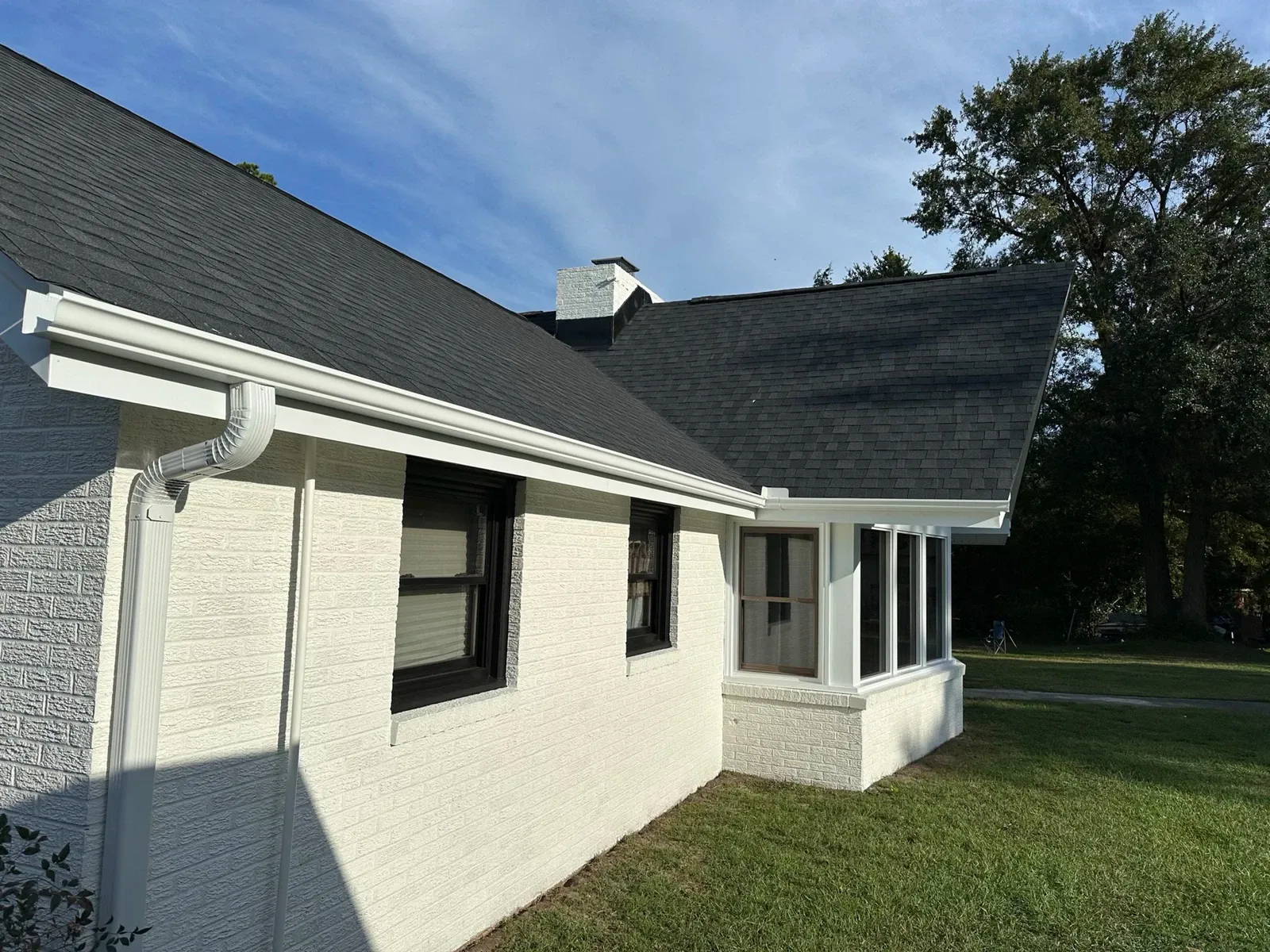
How much rain do Charleston gutters handle?
NOAA's 1991 to 2020 normals for Charleston International Airport put yearly precipitation at about 52.48 inches, and August averages about 7.0 inches on its own, according to Extreme Weather Watch's monthly rainfall table. That total is only half the story. What overwhelms a gutter is how fast the water arrives, not how much falls in a year.
Summer storms are the real test
From June through September, afternoon thunderstorms drop a heavy burst of rain in a short window. A gutter that handles an all-day drizzle can overflow in ten minutes of a July downpour, and the water lands against the siding and in the bed next to the foundation.
Why the roof shape matters more than the square footage
A steep roof sheds water faster, so the gutter below it fills faster. Valleys funnel two roof planes into one short stretch of gutter, and that corner is where most overflow starts. Long runs, common on ranch homes in Summerville and Goose Creek, collect a lot of roof edge before reaching a downspout.
Seamless vs sectional gutters
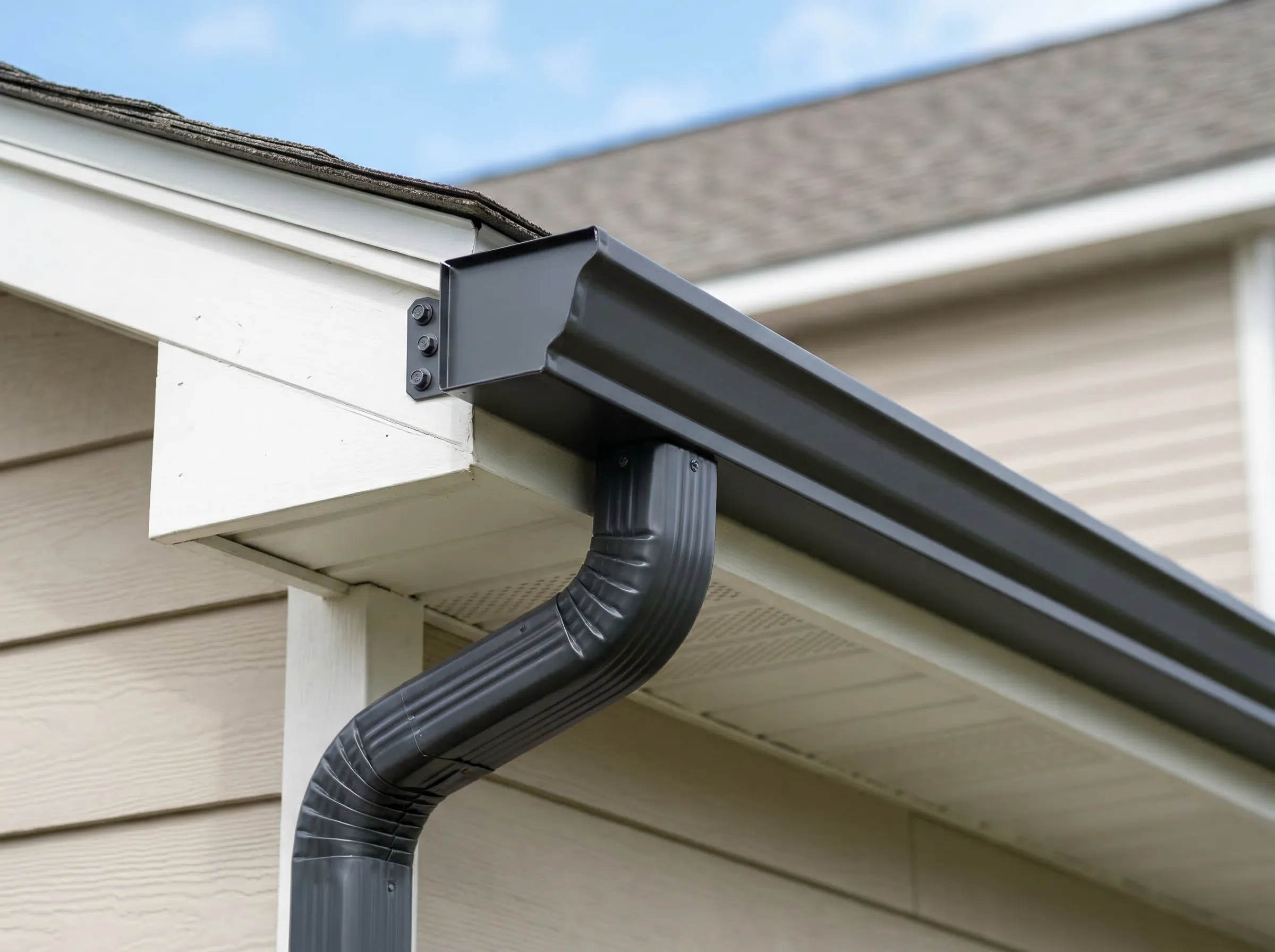
Seamless gutters are formed on site from a coil of aluminum (or copper or steel) run through a gutter machine, which cuts each piece to the exact length of that roof edge. A 42-foot run comes off the machine as one 42-foot piece. Sectional gutters come in 10- or 20-foot pieces from a store and get joined together with connectors and sealant every few feet.
Fewer seams, fewer leaks
Every joint in a gutter is a spot where sealant dries out, cracks and drips. In Charleston's heat and humidity those joints age fast, and a drip at a seam wets the same patch of fascia every time it rains. Seamless gutters only have joints at the corners and downspout outlets.
Where sectional still shows up
Sectional vinyl gutters are common on rentals and do-it-yourself jobs because the parts are cheap. They also sag sooner, crack in the sun and pull loose in storms. If you're replacing a sectional system, go seamless. Our seamless gutter installation service runs the coil on site at your house so every piece fits its run.
5-inch vs 6-inch gutters: which size do you need?
Per Angi's guide to standard gutter sizes, 5-inch K-style gutters suit adjusted roof areas under 5,500 square feet, and 6-inch K-style gutters suit 5,500 to 8,000 square feet. The 5-inch size pairs with 2x3 downspouts and the 6-inch with 3x4 downspouts. "Adjusted" means the roof area is scaled up for pitch, so a steep roof counts as more area than its footprint.
| Spec | 5-inch K-style | 6-inch K-style |
|---|---|---|
| Capacity guidance (Angi, adjusted roof area) | Under 5,500 sq ft | 5,500 to 8,000 sq ft |
| Standard downspout | 2x3 inch | 3x4 inch |
| Best fit in the Charleston area | Smaller homes, low or moderate pitch, short runs, few valleys | Long runs, steep pitch, roof valleys, metal roofs, homes under heavy trees |
| Clogging | Narrow 2x3 outlet clogs sooner with pine needles and oak leaves | Wider 3x4 outlet passes debris more easily |
Why many Lowcountry roofs end up with 6-inch and 3x4 downspouts
Plenty of homes in West Ashley, James Island and Summerville fall under 5,500 adjusted square feet on paper and still overflow 5-inch gutters in August. The cause is usually a valley dumping into one corner, or a 50-foot run with one downspout at the far end. A 3x4 downspout has twice the opening of a 2x3. If water pours over your corners in storms, size up.
When 5-inch is the right call
A one-story home with a moderate pitch, short runs and downspouts at both ends often does fine with 5-inch gutters. An extra downspout on a long run can also fix overflow without changing size.
Metal roofs and new roofs
Water comes off a metal roof faster than off shingles. If you're planning a roof replacement in Charleston, do the gutters with it so the new gutter hangs right under the new drip edge. Our roof replacement cost guide breaks down the roof side of that budget.
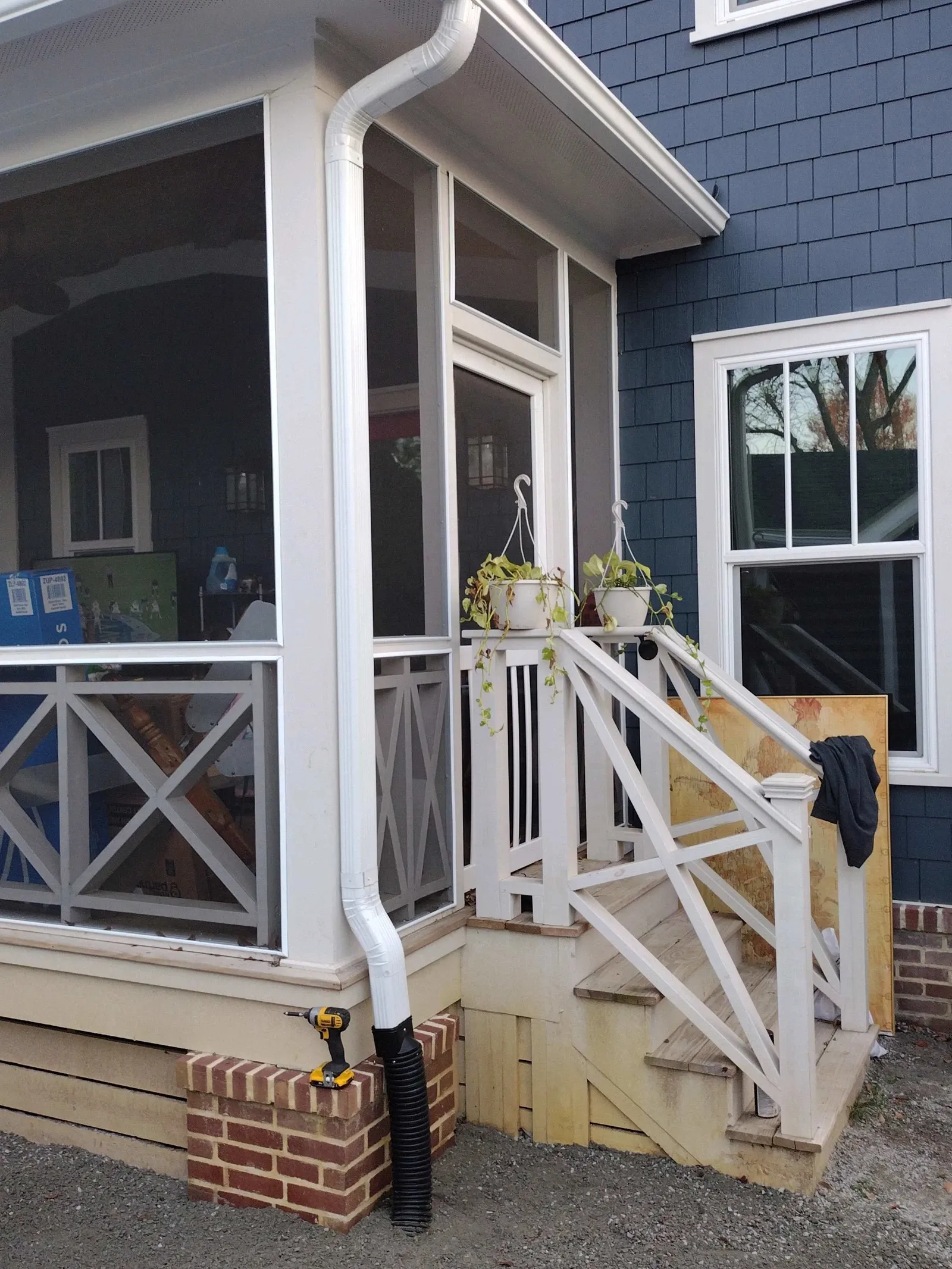
Downspout placement, crawl spaces and slab homes
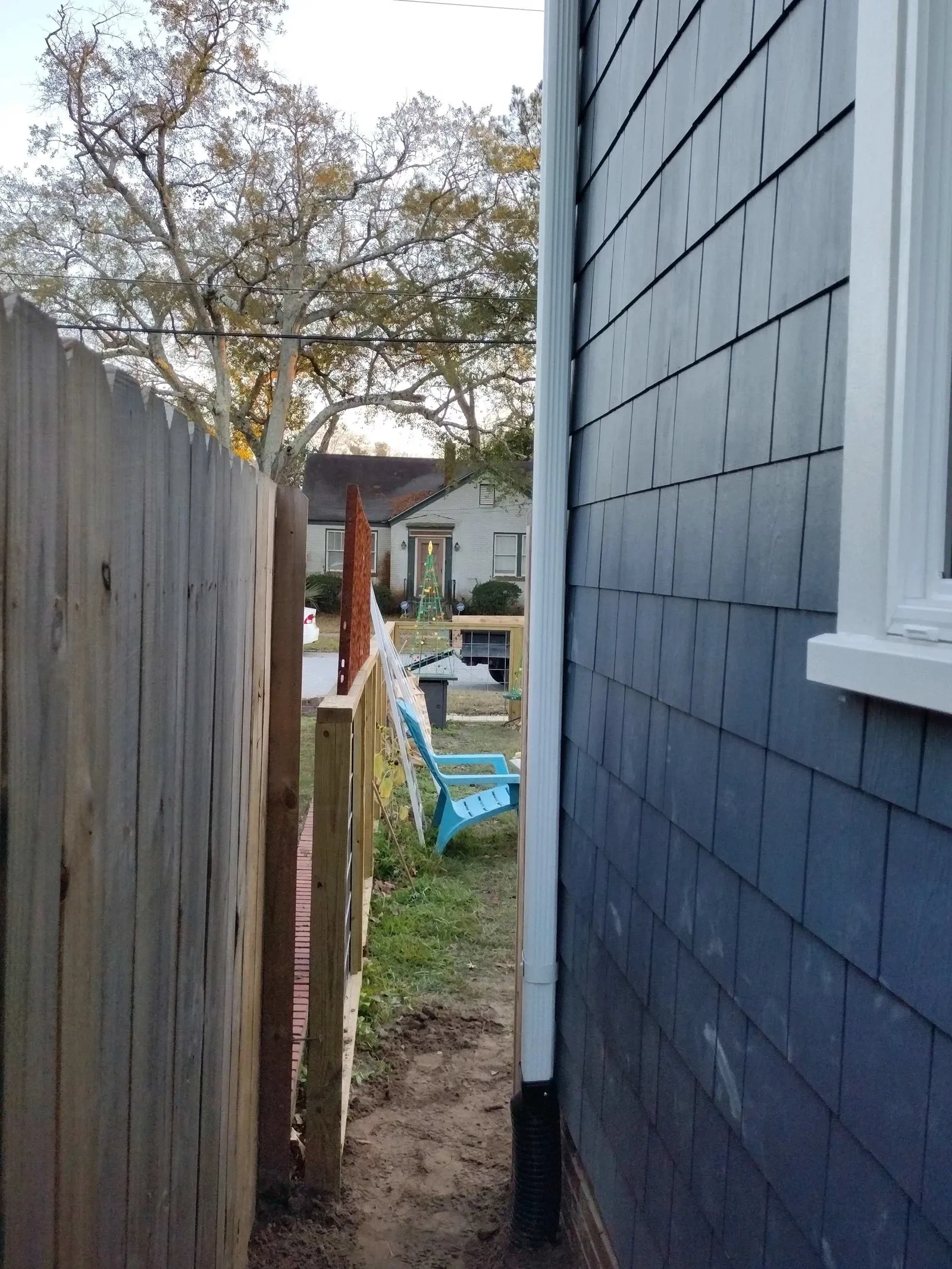
A gutter only moves water sideways. The downspout decides where it ends up, and a downspout that empties at the base of the wall puts the whole roof's runoff against your foundation. Each downspout should discharge onto a splash block, an extension or an underground drain line that carries water away from the house and toward ground that slopes away.
Crawl space homes
A lot of older homes in North Charleston, Hanahan and around the peninsula sit on crawl spaces. Downspouts that dump next to the foundation wall soak the soil, and the water ends up under the house as damp joists and wood that stays wet long enough to rot. Clemson Cooperative Extension notes that Formosan subterranean termites are most concentrated in coastal areas from Charleston south to Beaufort, per its report on Formosan termite distribution in SC, and a constantly damp crawl space is the last thing you want with them around.
Slab homes
Newer subdivisions in Summerville, Ladson and Moncks Corner are mostly slab-on-grade. Water pooling at the slab edge washes out soil and splashes mud up the lower course of siding. Flexible extensions are cheap but get kicked out of place, so a buried drain line to a pop-up emitter in the yard is the better fix on flat Lowcountry lots.
Water and the deck ledger
A gutter overflowing above the deck's ledger board keeps that connection wet. The American Wood Council's DCA 6 deck guide spends real space on ledger attachment and flashing for a reason: that's where deck rot starts. If the boards near the house are already soft, read our guide to deck repair or replacement before you fix the gutters, or see our deck repair service for the fix itself.
Gutter materials and colors near salt air
Aluminum is the standard for seamless gutters in the Charleston area. It doesn't rust, it's light enough to hang on fascia, and the coil comes with a baked-on finish in dozens of colors. A heavier gauge resists dents from ladders and branches. Near Mount Pleasant, Isle of Palms and Folly Beach, ask for stainless or coated fasteners, since a cheap steel screw rusts and streaks the gutter face.
Copper and galvanized steel
Copper shows up on historic homes downtown and on Kiawah and Sullivan's Island. It won't rust and weathers from penny color to brown and then green, but it costs far more and needs soldered seams. Never mix copper with aluminum or galvanized parts, because they corrode where they touch. Galvanized steel is stronger than aluminum, but once salt spray wears through the zinc coating, the steel rusts. Near salt air, we steer people toward aluminum.
Matching colors to siding and trim
White gutters disappear against white trim. Black or dark bronze gutters give a white or light gray house a crisp edge line. If you're replacing siding too, pick the gutter color with the siding samples in hand. Our post on the best siding for Charleston SC homes covers vinyl and fiber cement colors, and our siding contractor page shows the work.


Gutter guards in Charleston: mesh, screen or reverse-curve
Gutter guards cut down how often you clean, but none of them mean you never clean again. The right guard depends on what falls on your roof. Around Charleston that's mostly pine needles from loblolly pines and small, leathery leaves from live oaks, plus pollen and oak tassels in spring.
Fine mesh guards
Micro-mesh guards use a fine stainless or aluminum mesh over a frame, and needles can't slip through. Pollen and grit can build up on top and slow the water, so mesh needs a brush-off after spring pollen season.
Screen guards
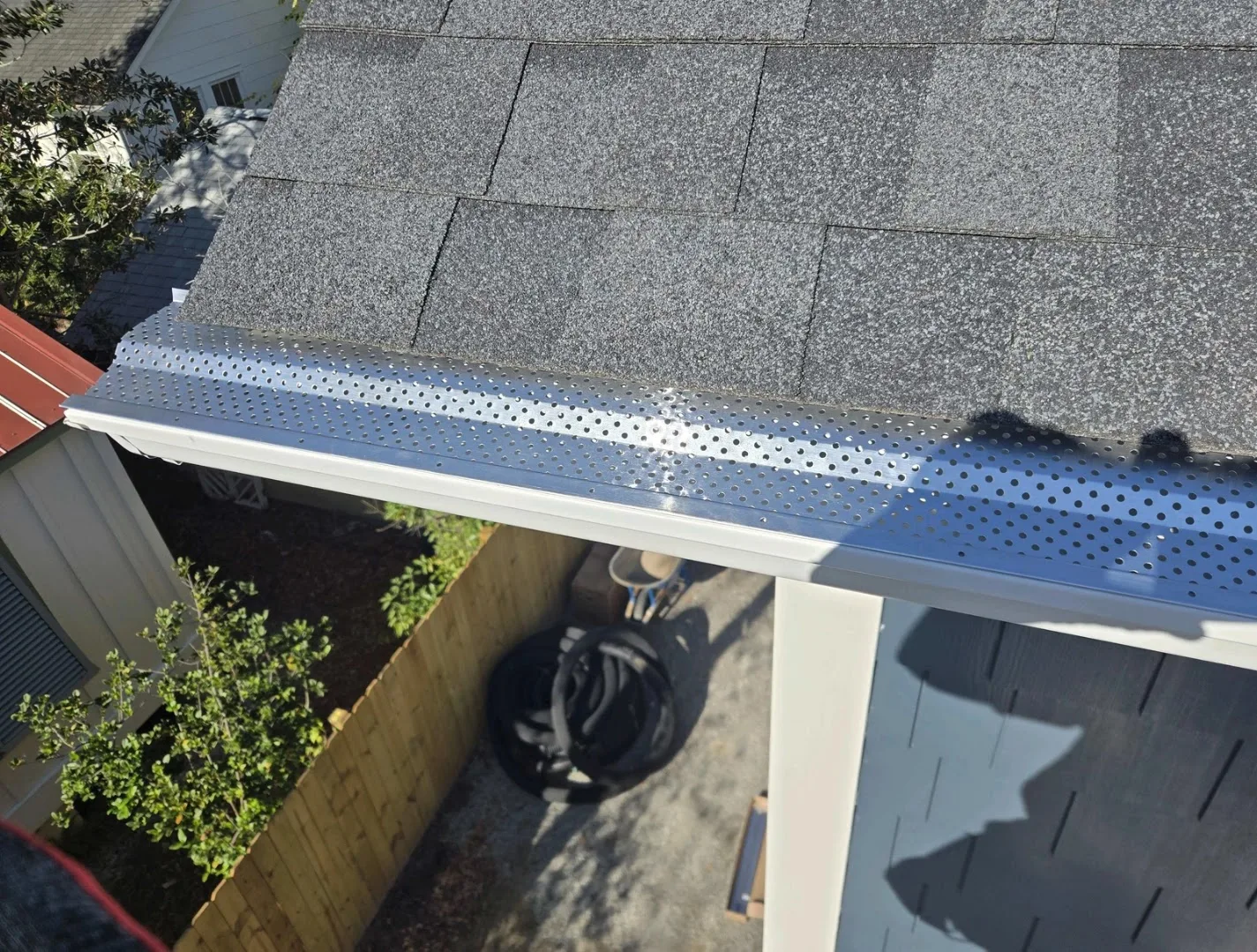
Perforated or expanded-metal screens have bigger holes. They keep out live oak leaves, acorns and sticks and cost less than micro-mesh, but pine needles poke through and build a mat. Under oaks with no pines, they work fine.
Reverse-curve guards
Reverse-curve guards are solid covers that bend water around a rounded nose into a slot while leaves slide off. In a hard Charleston downpour, water can overshoot the curve, and they have to match the roof pitch. If pines hang over your roof, pick micro-mesh. Any guard works best on 6-inch gutters with 3x4 downspouts.
Fascia rot, hurricane season and cleaning
The fascia board is the trim board the gutter hangs on. When old gutters leak or overflow for years, water soaks the back of the gutter and the fascia behind it, and the board rots from behind where nobody sees it. You usually find out when the old gutter comes off and the screws pull out of soft wood.
Replace bad fascia during the install
Hanging a new gutter on rotted fascia means the hangers loosen and the gutter sags within a season or two. We check the fascia as the old system comes down and replace soft sections first. If the rot reaches the rafter tails or roof decking, that's a roofing repair, better found now than after a storm.
Hurricane season fastening
Wind gets under a loose gutter and peels it off the house. Hidden hangers screwed into the fascia hold far better than the old spike-and-ferrule style. Tighter hanger spacing is worth it near the water in Mount Pleasant and on the islands, and downspouts should be strapped at the top, middle and bottom.
A cleaning schedule that fits Charleston trees
Without guards, clean at least twice a year: late spring after pollen and oak tassels drop, and late fall after the pines shed. A gutter can look clear while the downspout is packed solid at the elbow, so check those too.
Signs your gutters are failing
These are the signs that it's time for repair or replacement rather than another cleaning:
- Water spilling over the front edge in moderate rain, even when the gutter is clean
- Runs that sag, pull away from the fascia or hold standing water
- Drips at seams and corners
- Soft or stained fascia, or mildewed siding below a gutter
- Washed-out mulch or puddles along the foundation
A failing gutter costs you in siding, deck boards and crawl space framing, which all cost more to fix than the gutter. That's why we look at all three when we quote gutters.
What drives the cost of seamless gutters in Charleston, SC?
We don't publish a flat price because no two houses have the same runs, corners and downspouts. The quote comes from measuring the house, and these are the lines that move it.
The line items to look for
- Linear feet of gutter, measured run by run
- Gutter size (5-inch or 6-inch) and coil gauge
- Number of stories, since two-story work takes taller ladders or staging and more time
- Number of corners (miters) and end caps
- Downspout count and size (2x3 or 3x4), plus extensions or underground drains
- Gutter guards, by type and linear foot
- Fascia board repair or replacement
- Removal and disposal of the old gutter system
Most low quotes leave out fascia repair and old-system removal, then add them once the crew finds soft wood. Ask for both as separate lines up front, and ask how many downspouts the quote includes. A quote with two downspouts on a house that needs four will look cheaper and overflow the first August.
Bundling with a roof or siding job
Gutters come down during a roof or siding job anyway, so doing them together saves a second removal and rehang. Our free consultation covers the gutters, fascia and drainage in one visit, and the material selections, timeline and pricing are approved before work starts.
"Fast, fair, and friendly with gutters installed flawlessly and communication that made the whole process a breeze! I would definitely use them again if I had another gutter need."Jeff B, Google review
Where we install gutters
We install seamless gutters from our home base in Summerville across Dorchester County, into Charleston County including West Ashley, James Island and North Charleston, and out to Mount Pleasant and the islands. Gutter installation in Summerville and Goose Creek means pine-heavy lots, while homes near the harbor deal more with salt air and wind.
Frequently asked questions
What size gutters do I need in Charleston, SC?
Angi recommends 5-inch K-style gutters for adjusted roof areas under 5,500 square feet and 6-inch for 5,500 to 8,000 square feet. In Charleston, many homes with long runs, steep pitches or valleys do better with 6-inch gutters and 3x4 downspouts because afternoon summer storms drop a lot of rain in a short time.
Are seamless gutters better than sectional gutters?
Yes, for most homes. Seamless gutters are formed on site from a coil to the exact length of each run, so the only joints are at corners and downspout outlets. Sectional gutters have a joint every 10 or 20 feet, and each joint's sealant can crack and drip in Charleston's heat and humidity.
What are the best gutter guards for pine needles?
Fine micro-mesh guards stop pine needles best because needles can't slip through the openings. Screen guards with larger holes let needles poke through and form mats. Under live oaks with no pines nearby, screen guards or reverse-curve covers work. Mesh still needs an occasional brush-off after spring pollen season.
Where should downspouts drain on a crawl space home?
Downspouts should empty onto splash blocks, extensions or an underground drain line that carries water away from the house toward ground that slopes away. Water dumped at the foundation wall of a crawl space home soaks the soil and leaks underneath, leaving damp joists, musty smells and wood that stays wet long enough to rot.
Should I replace gutters when I replace my roof?
It usually makes sense. Gutters often come down during a roof replacement so the roofer can set the drip edge, and the new gutter hangs right under it. Doing both together avoids removing and rehanging the gutters twice and lets you fix any rotted fascia while the roof edge is open.
How often should gutters be cleaned in Charleston?
Without guards, clean them at least twice a year: once in late spring after pollen and oak tassels fall, and again in late fall after pines shed. Homes under heavy pines often need a third cleaning. Check downspouts each time, because they can clog at the elbow while the gutter looks clear.
Get your gutters measured for free
American Custom Exteriors measures every run, checks the fascia and plans downspout drainage during a free on-site consultation in Charleston, Berkeley and Dorchester counties. We're open Monday through Saturday from 7:00 AM. Call us or send a request through our contact page, and see our seamless gutter services for more on the work.
Call 843-518-9923Request a free estimate