
The cost to build a deck in Charleston SC: wood vs. composite and permits
The 2025 Cost vs Value report puts a wood deck addition in the South Atlantic region at $18,397 and a composite deck at $24,347, with 82.9% and 87.3% of the cost recouped at resale. Those figures describe one sample project. Height off grade, stairs, railings, footings and hardware move the cost to build a deck in Charleston SC up or down from there.
American Custom Exteriors builds and replaces decks across Charleston, Berkeley and Dorchester counties from our office at 207 Pinewood Dr in Summerville. This guide covers the published cost numbers, wood vs. composite, the deck rules your inspector checks, and the Lowcountry conditions that push a price up: sandy soil, salt air, Formosan termites and HOA review boards.
If your current deck is soft at the ledger or loose at the stairs, start with our post on whether to repair or replace a Charleston deck.
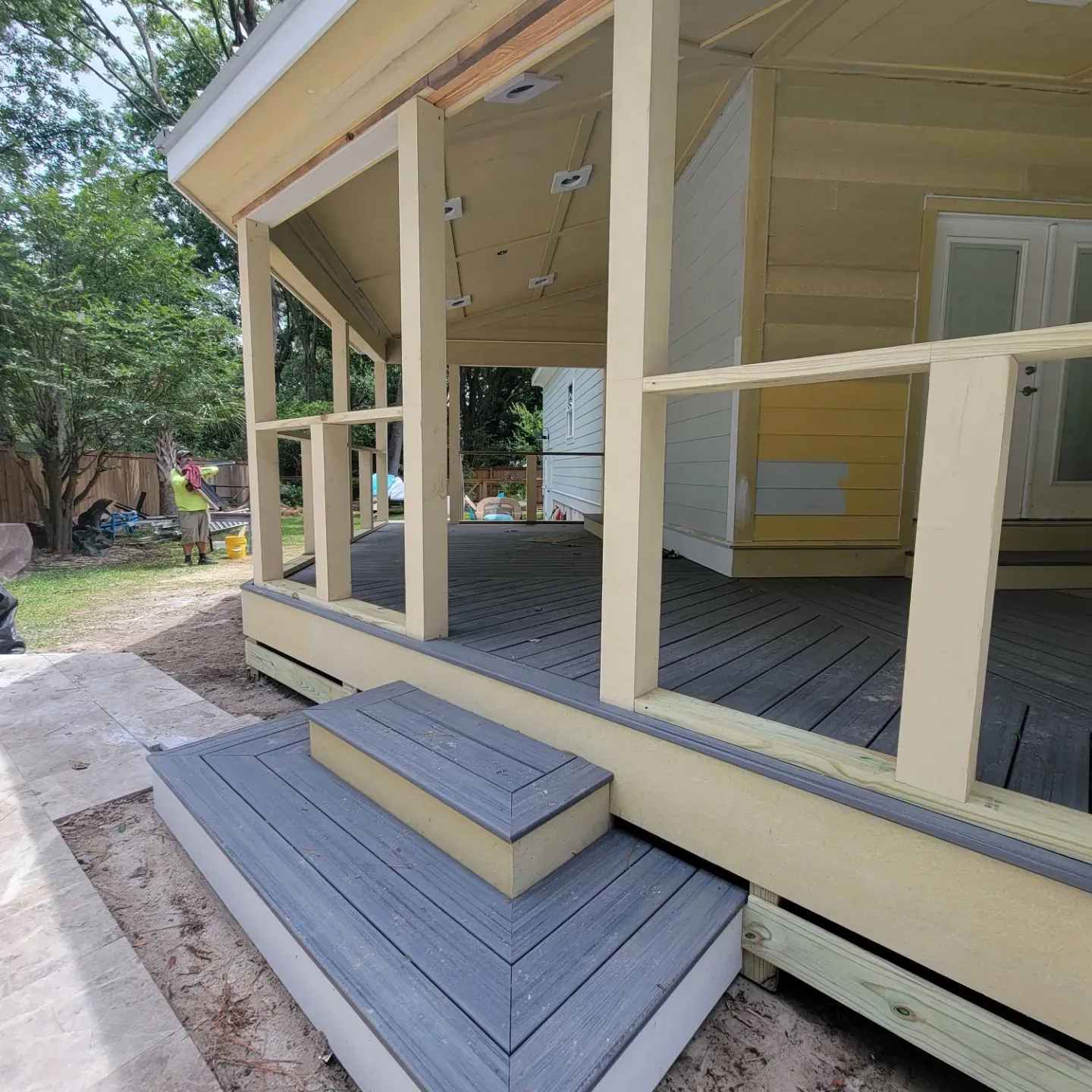
How much does it cost to build a deck in Charleston SC?
The most useful public benchmark is the 2025 Cost vs Value report from the Journal of Light Construction and Zonda. Nationally, a wood deck addition averages $18,263 with $17,323 in resale value, so 94.9% of the cost comes back when the house sells. A composite deck addition averages $25,096 nationally, with $22,199 in resale value and 88.5% recouped.
South Atlantic numbers
The South Atlantic regional figures, which the report lists next to the Charleston market, run close to the national ones. A wood deck averages $18,397 with $15,243 in resale value, or 82.9% recouped. A composite deck averages $24,347 with $21,249 in resale value, or 87.3% recouped. In this region composite returns a larger share of its cost than wood does, which is the reverse of the national pattern.
The regional gap between wood and composite is $5,950. Most of it is decking and railing, since the framing is pressure-treated pine either way.
Why your number won't match the report
Cost vs Value prices one defined sample project in every market. A small ground-level platform in Ladson can come in well under these numbers. A second-story deck off a raised house on Isle of Palms, with a long stair run and stainless hardware, can go well over them.
A real figure needs someone to measure the site and check where the deck meets the house. We do that at a free on-site consultation.
What drives the price of a Lowcountry deck
Square footage sets the baseline. More square feet means more footings, joists and decking, and angled corners or picture-frame borders add cutting time and waste. But height, stairs, railings, footings and hardware decide where a Charleston-area deck lands.
Height off grade and elevated homes
A low deck needs short posts and often no guardrail. Once a deck rises high enough to need guards, every foot of open edge picks up railing cost. Many homes on James Island, Folly Beach and the barrier islands sit up on pilings, and a deck at that height needs taller posts, more bracing and a full stair run with landings. We build decks across Charleston County, and an elevated coastal deck costs more than a ground-level deck of the same size every time.
Stairs and railings
Stairs are priced by riser count and width. Railing is priced by the linear foot: pressure-treated wood balusters cost the least, while composite, aluminum and cable systems cost more.
Footings in sandy or wet soil
Much of the Lowcountry sits on sandy soil with a high water table, and lots near the marsh in West Ashley or Mount Pleasant can be soft. Footing size and depth come from code and your inspector. A hole that fills with water or soft bearing soil can mean larger footings or extra digging, so ask whether a quote assumes standard footings and what happens if the crew hits water.
Framing lumber and fasteners
Framing is pressure-treated pine in almost every case, even under composite or PVC decking. Lumber rated for ground contact costs more than lumber rated for above-ground use, and posts and anything close to the soil should carry the ground-contact rating. Hidden fastener systems for composite boards add material and labor over face screws, but they leave a clean surface with no screw heads to catch bare feet.
Hardware near salt air
Joist hangers, post bases, lag screws and hold-downs corrode faster near salt water. Hot-dipped galvanized hardware is the normal minimum for treated lumber, and on oceanfront and marsh-front lots on Sullivan's Island, Kiawah Island and Seabrook Island, stainless steel is the safer pick. Stainless costs more per piece, and a deck uses a lot of connectors, so this line adds up on coastal jobs.
Benches, lighting and roofs
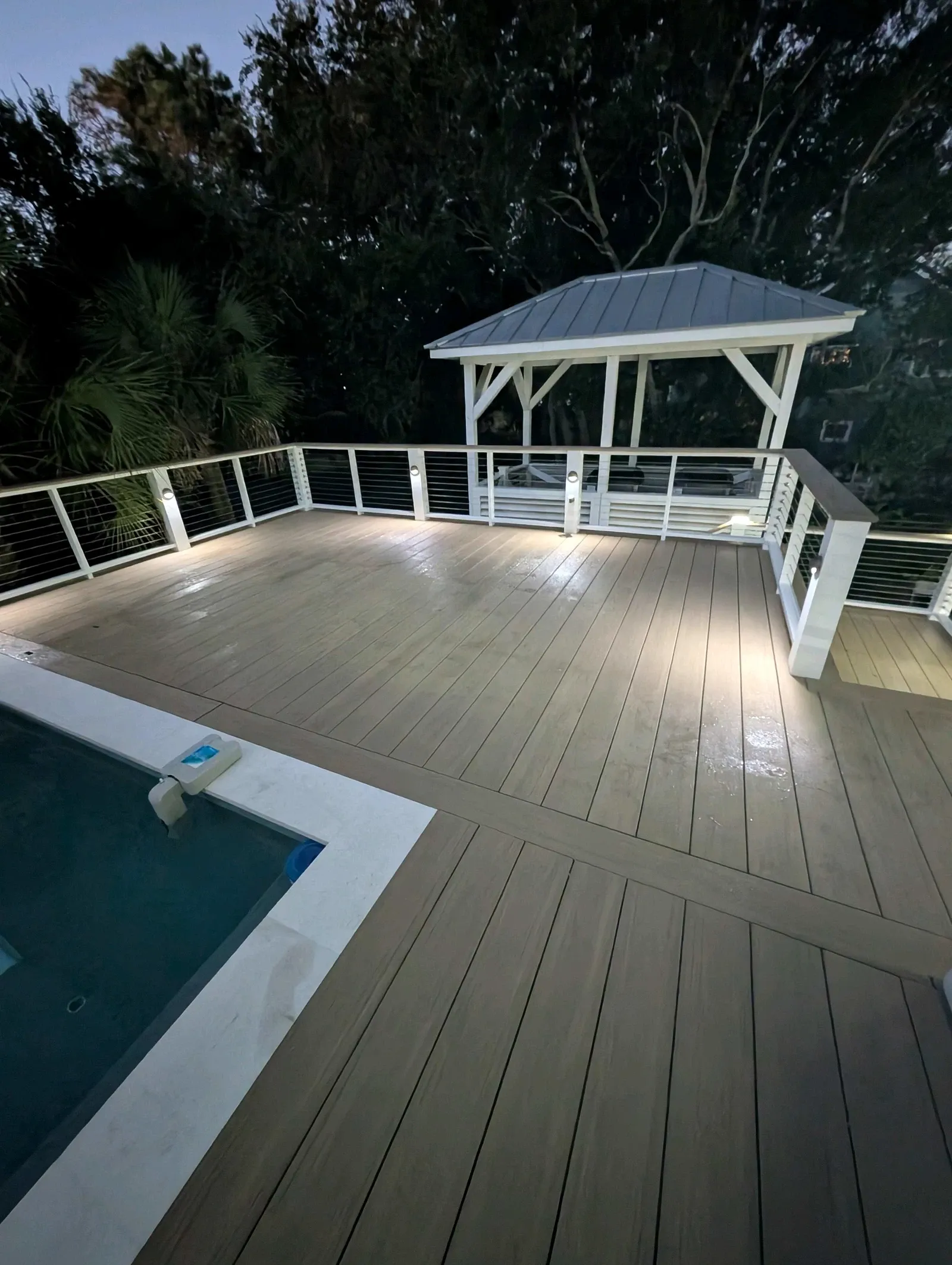
Built-in benches, low-voltage lighting and a covered roof each add a line to the quote. A roof over a deck is close to a small addition, with posts sized for the load and flashing where it meets the house.
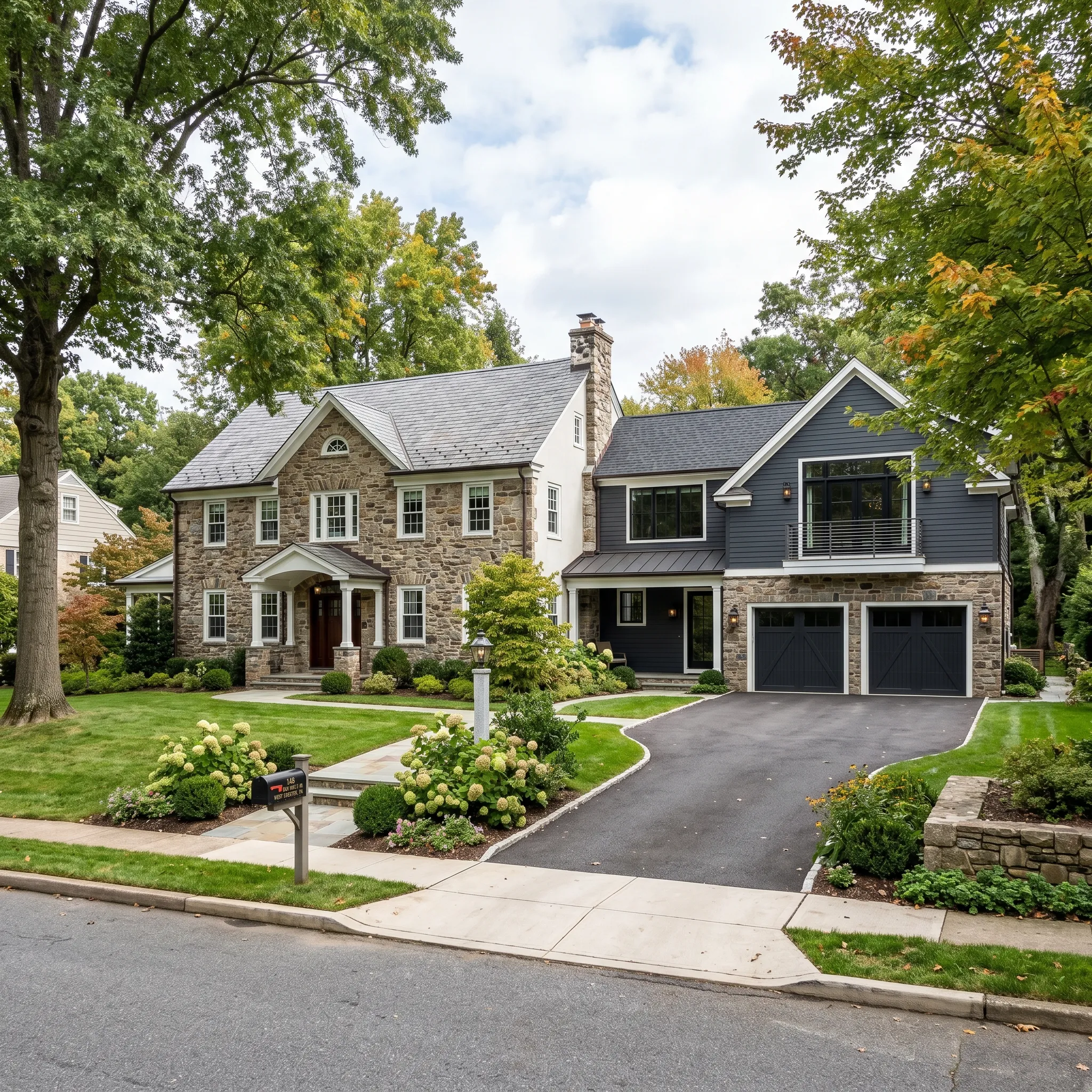
Wood vs. composite vs. PVC decking in Charleston heat
Pressure-treated pine decking costs the least up front and needs the most care. Composite and PVC cost more but skip the staining. In Charleston the choice usually comes down to July sun on bare feet and how many weekends you'll spend on upkeep.
Pressure-treated wood decking
Pine boards tend to stay cooler underfoot than dark synthetic boards, and a damaged board is cheap to swap. But wood checks and splinters as it dries, and it needs cleaning and a stain or sealer on a regular schedule. Under live oaks, it also grows mildew that makes it slick after rain.
Composite decking
Composite boards blend wood fiber and plastic, usually under a protective outer cap. They don't splinter and don't need staining, which is the main reason people pay more for them. Darker colors get hot in direct afternoon sun, so pick a lighter shade for a south- or west-facing deck. Composite can still grow mildew on its surface in shade, but it comes off with a wash instead of a refinish.
PVC decking
PVC boards contain no wood fiber, so they're lighter and shrug off moisture, which suits decks near docks and pools. They usually cost more than composite. Like composite, they heat up in the sun, and lighter colors run cooler. The 2025 Cost vs Value report doesn't price a PVC deck, so any PVC price comparison has to come from real quotes.
| Factor | Pressure-treated wood | Composite | PVC |
|---|---|---|---|
| 2025 national job cost (sample project) | $18,263 | $25,096 | Not priced in the report |
| 2025 South Atlantic job cost | $18,397 | $24,347 | Not priced in the report |
| South Atlantic cost recouped at resale | 82.9% | 87.3% | Not priced in the report |
| Heat underfoot in July sun | Usually cooler | Dark colors get hot | Dark colors get hot |
| Upkeep | Clean and restain on a schedule, watch for splinters | Wash off mildew, no staining | Wash off mildew, no staining |
| Look | Natural wood that turns gray without stain | Wood-grain patterns in many colors | Wood-grain patterns in many colors |
| Framing underneath | Pressure-treated pine | Pressure-treated pine | Pressure-treated pine |
Our take: if nobody in the house will keep up with staining, composite earns back its extra cost in skipped weekends, and the South Atlantic resale numbers favor it too. On a tight budget, pressure-treated pine is fine if you plan for upkeep. Our deck installation page shows how we plan a new deck.
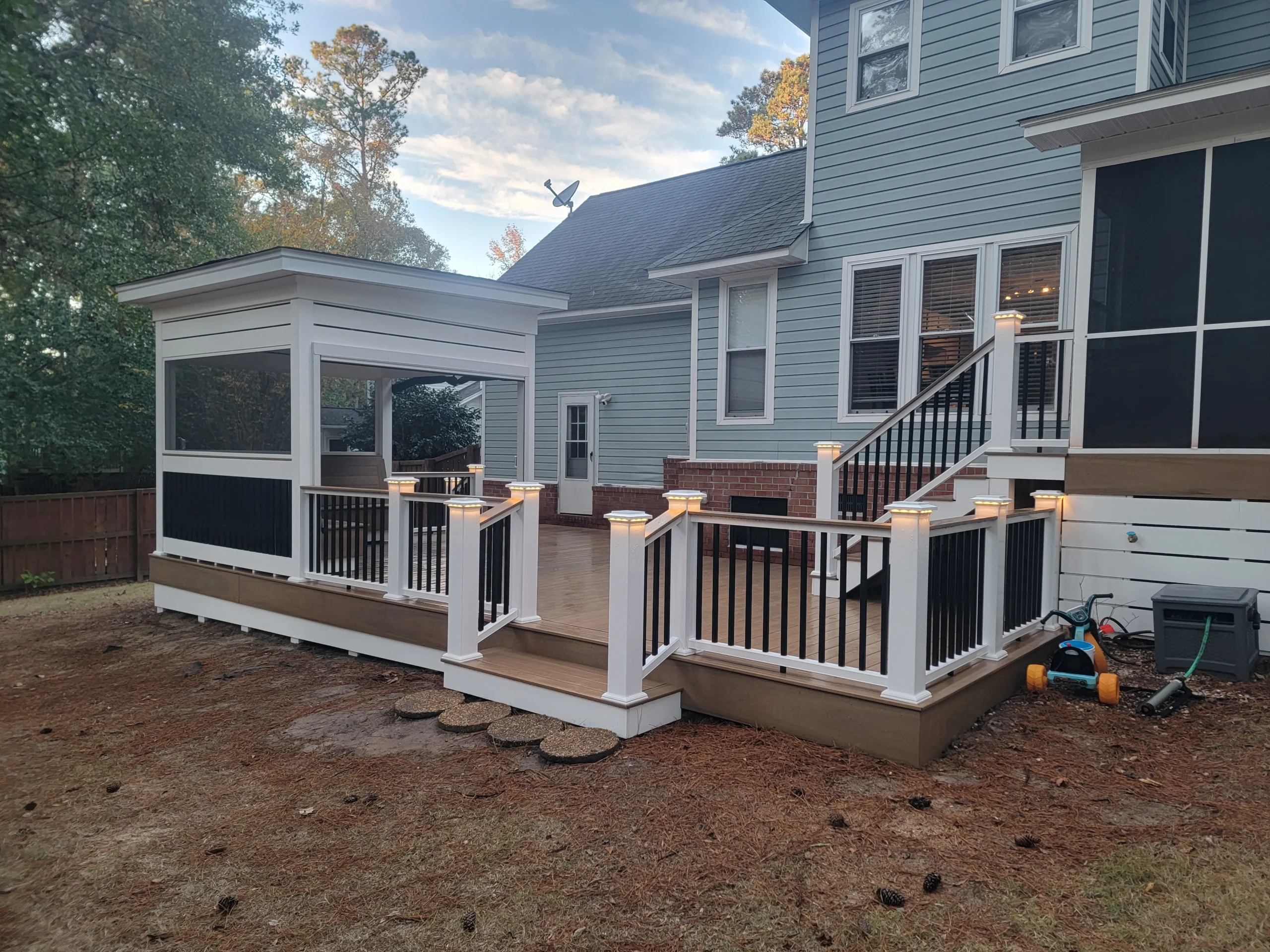
Do I need a permit to build a deck in Charleston?
Yes, a new attached deck almost always needs a building permit, and the permit comes from whichever jurisdiction your house sits in. That might be the City of Charleston, North Charleston, Mount Pleasant, Summerville or Goose Creek, or Charleston, Berkeley or Dorchester County for unincorporated addresses. Check with your town or county building department before any work starts.
City of Charleston deck detail package
The City of Charleston publishes a Residential Deck Detail Package based on the South Carolina residential building code. It shows the footing, framing, ledger and guard details the city expects on a typical deck permit. Even if you live outside city limits, it's a good look at what an inspector checks.
What DCA 6 requires
Many local deck details trace back to the American Wood Council's DCA 6 Prescriptive Residential Wood Deck Construction Guide, which applies to single-level residential wood decks. Four of its requirements matter most when you're reading a quote:
- Posts are at least 6x6. A deck held up on 4x4 posts doesn't meet the guide.
- The lateral load connection between deck and house uses 1,500-pound hold-down tension devices.
- The ledger board gets flashing where it attaches to the house, so water stays out of the rim joist.
- A ledger can't be attached to brick veneer. A deck on a brick-veneer house needs its own posts and beam along the wall.
A multi-level deck falls outside that single-level guide, so its plans may need more detail from a designer.
HOA approval in Mount Pleasant and Summerville
Many neighborhoods in Mount Pleasant and Summerville have an architectural review committee that must approve a deck first. They usually want a site plan, setbacks, and the decking material and color. Get approval in writing, because a town permit doesn't override neighborhood covenants.
Once you approve the plan, our team handles the permits and inspections, the same as on our other projects in Dorchester County and around the region. Homeowners searching for a deck builder in Summerville can reach us at the same Pinewood Dr office.
Termites, soil and flood zones
The two biggest threats to a Charleston deck frame are termites and standing moisture, and both start at the soil line.
Formosan termites
Clemson Cooperative Extension counts eight termite species in South Carolina, four drywood and four subterranean. The Formosan subterranean termite, introduced to the state in the 1950s, can be the most destructive and hardest to treat, and it's most concentrated along the coast from Charleston south to Beaufort. Its swarmers are about 1/2 inch long and golden brown.
Keep wood off the soil. Posts should sit on concrete footings or carry a ground-contact rating, skirting boards should stop above grade, and firewood and mulch shouldn't be piled against the frame. Ask your pest control company whether your current termite treatment covers the new deck footprint.
Flood zones
Parts of the Charleston area sit in FEMA flood zones, and a deck on a property in one may face extra rules on height and footings. Check your property's FEMA flood zone with your building department before design starts, since the answer can change the footing plan.
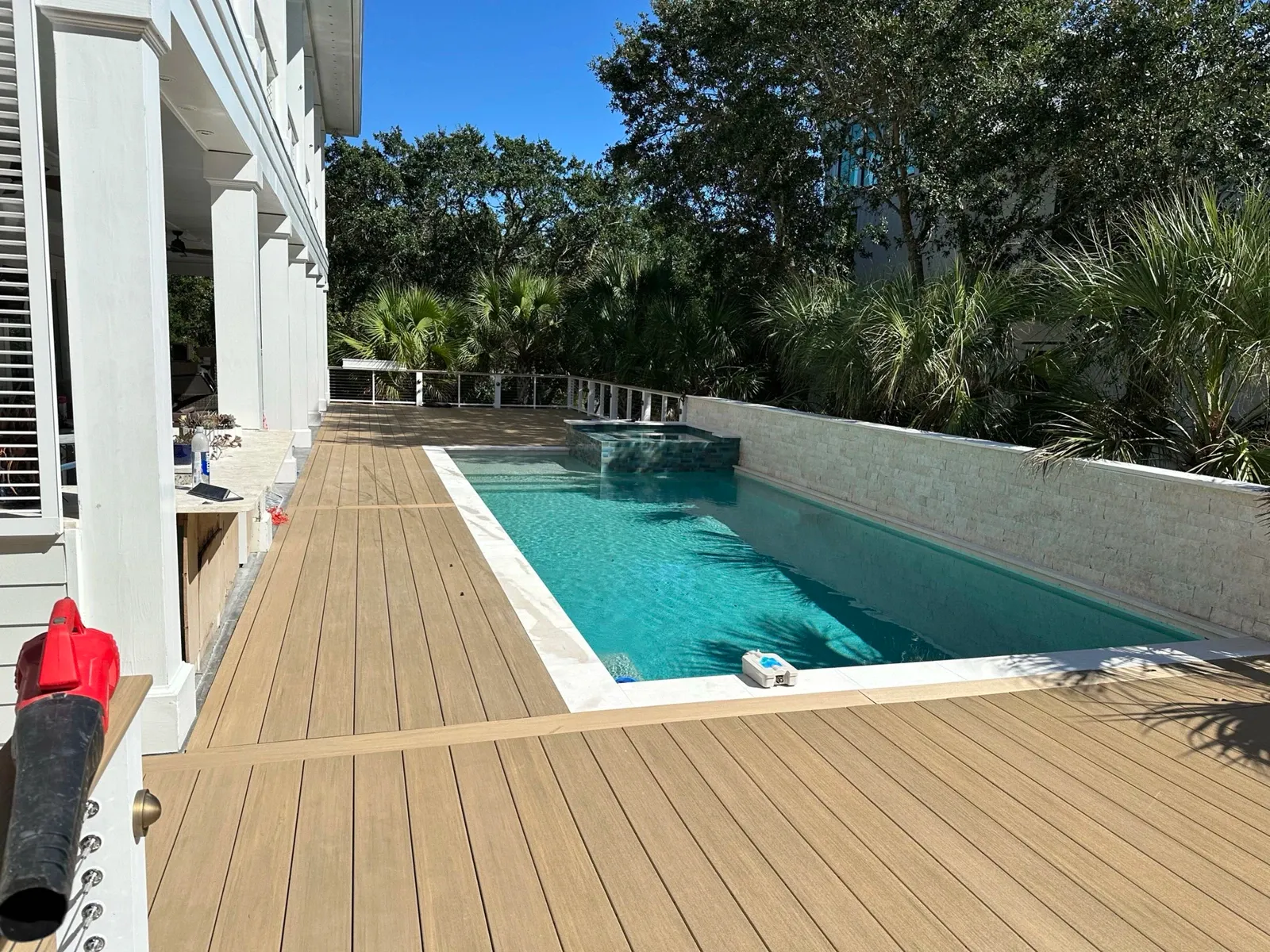
How long a deck build takes, phase by phase
Design, HOA review and permit approval often take longer than the build itself, so for a deck ready by spring, start planning in winter. Here is the order of work:
- We visit, measure the site, check where the deck meets the house and talk through materials and budget at a free on-site consultation.
- We draw the plan, and you approve the material selections, timeline and price before any work starts.
- The HOA reviews the plan if your neighborhood requires it, then the permit application goes to your town or county.
- Footings go in, with an inspection if your jurisdiction calls for one before concrete.
- Framing goes up: posts, beams, joists, ledger flashing and hardware, followed by a framing inspection where required.
- Decking, stairs and railings go on, then any lighting or benches.
- The final inspection happens, and we do a walkthrough with you on the finished deck.
NOAA's 1991 to 2020 normals for Charleston International Airport show about 52.48 inches of precipitation a year, with August the wettest month at about 7.0 inches, according to Extreme Weather Watch. Summer builds lose more days to storms than fall builds do.
How to compare deck quotes
Line the quotes up item by item. Two deck bids with a big price gap are often pricing two different decks, one with stainless hardware and composite rail and one with the cheapest of each. These are the items every quote should spell out.
What each quote should list
- Deck size, height and number of stairs
- Decking material and color
- Framing lumber and whether posts are ground-contact rated
- Hardware type, hot-dipped galvanized or stainless
- Railing material and total linear feet
- Number and depth of footings
- Ledger flashing and the lateral load connection
- Permit paperwork and who pays the fees
- Tear-out and haul-away of an old deck
Red flags in a deck bid
Be wary of a quote that never mentions a permit, bolts a ledger to brick veneer, or sets the deck on 4x4 posts. The last two conflict with DCA 6. A quote should also say how the crew protects your yard and cleans up. One of our Google reviewers put it this way:
"I've had both interior and exterior projects completed by Ace Custom Exteriors. They are fabulous to work with, attentive to details, take great care in protecting your surfaces and clean up after themselves."Lori Miller, Google review
Our deck builder page covers new decks and full deck replacements. If your current deck only needs new boards, stairs or railings, deck repair costs less than a new build and is worth pricing first.
Add-ons that pair with a new deck
Plan add-ons now and the framing can be built to carry them later instead of being torn open.
A pergola over the deck
A pergola gives a hot deck partial shade without a full roof. If you might want one later, tell your builder now so posts and beams land where a pergola can tie in. Our pergola builder page shows the styles we build.
An outdoor kitchen
A grill station or full outdoor kitchen is heavy, needs gas or electric, and shouldn't sit on decking that isn't framed for the load. One common layout puts the kitchen on a patio at grade right next to the deck stairs. Our outdoor kitchens page covers both setups.
The rest of the backyard
An outdoor fireplace or a sunroom can connect to a deck too. Our outdoor living page shows how those pieces fit together, and our sunroom vs. pergola vs. screened porch guide compares the covered options.
Frequently asked questions
How much does it cost to build a deck in Charleston SC?
The 2025 Cost vs Value report lists a wood deck addition in the South Atlantic region at $18,397 and a composite deck at $24,347. Those numbers describe one sample project. Your price depends on size, height off the ground, stairs, railing length, footing conditions and hardware, so get an on-site estimate for a real number.
Is composite or wood better for a Charleston deck?
Pressure-treated wood costs less up front and tends to stay cooler underfoot, but it needs regular cleaning and staining and can splinter. Composite costs more and skips the staining, though dark colors get hot in July sun. In the South Atlantic region, composite recouped 87.3% of its cost at resale in 2025, against 82.9% for wood.
Do I need a permit for a deck in Charleston?
A new attached deck almost always needs a building permit. It comes from the jurisdiction your home sits in, such as the City of Charleston, Mount Pleasant, North Charleston, Summerville, Goose Creek or the county for unincorporated areas. Check with your town or county building department, and get HOA approval first if your neighborhood requires it.
Can a deck ledger be attached to a brick house?
Not to brick veneer. The American Wood Council's DCA 6 guide doesn't allow a deck ledger on brick veneer, because the veneer isn't built to carry the deck's load. On a brick-veneer home, the deck needs its own posts and beam along the wall so it stands on its own.
Is the framing under a composite deck also composite?
No. In almost every case the framing under composite or PVC decking is pressure-treated pine. That's why posts near the soil should be ground-contact rated, the hardware should resist corrosion, and the frame should stay off the dirt to limit termite and moisture damage along the coast from Charleston to Beaufort.
Get a deck estimate in the Charleston area
American Custom Exteriors builds new decks and replaces old ones in Charleston, Berkeley and Dorchester counties. Call us Monday through Saturday from 7:00 AM, or request a free on-site consultation and estimate online.
Call 843-518-9923Request a free estimateSources
- Journal of Light Construction, Cost vs Value 2025: National averages
- Journal of Light Construction, Cost vs Value 2025: Charleston, SC and South Atlantic region
- City of Charleston, Residential Deck Detail Package
- American Wood Council, DCA 6 Prescriptive Residential Wood Deck Construction Guide
- Clemson Cooperative Extension, Formosan termites increase distribution in SC
- Extreme Weather Watch, Charleston SC average rainfall by month (NOAA 1991 to 2020 normals)
