Best siding for Charleston, SC homes: vinyl vs. fiber cement vs. wood
For most houses here, fiber cement is the best value. Cost vs Value 2025 puts a South Atlantic fiber cement siding job at $19,628 with 119.2% of the cost recouped at resale, while vinyl in the Charleston market recouped 90.9% on a $16,386 job. Vinyl wins on upfront price. Wood fits historic peninsula homes. The house wrap and flashing behind any of them matter more than the panel.
The best siding for Charleston SC homes has to handle three things at once: wet heat for most of the year, rain driven sideways by tropical storms, and, south of the Cooper River especially, termites that eat wood. Vinyl, fiber cement and wood can all work on a Lowcountry house. Each one fails in a different way, and the price gap between them is smaller than most people expect.
American Custom Exteriors installs vinyl siding and fiber cement siding across Charleston, Berkeley and Dorchester counties. Below are the published cost numbers, what rots behind the panels, and a checklist for comparing quotes.
What siding pays back best in Charleston?
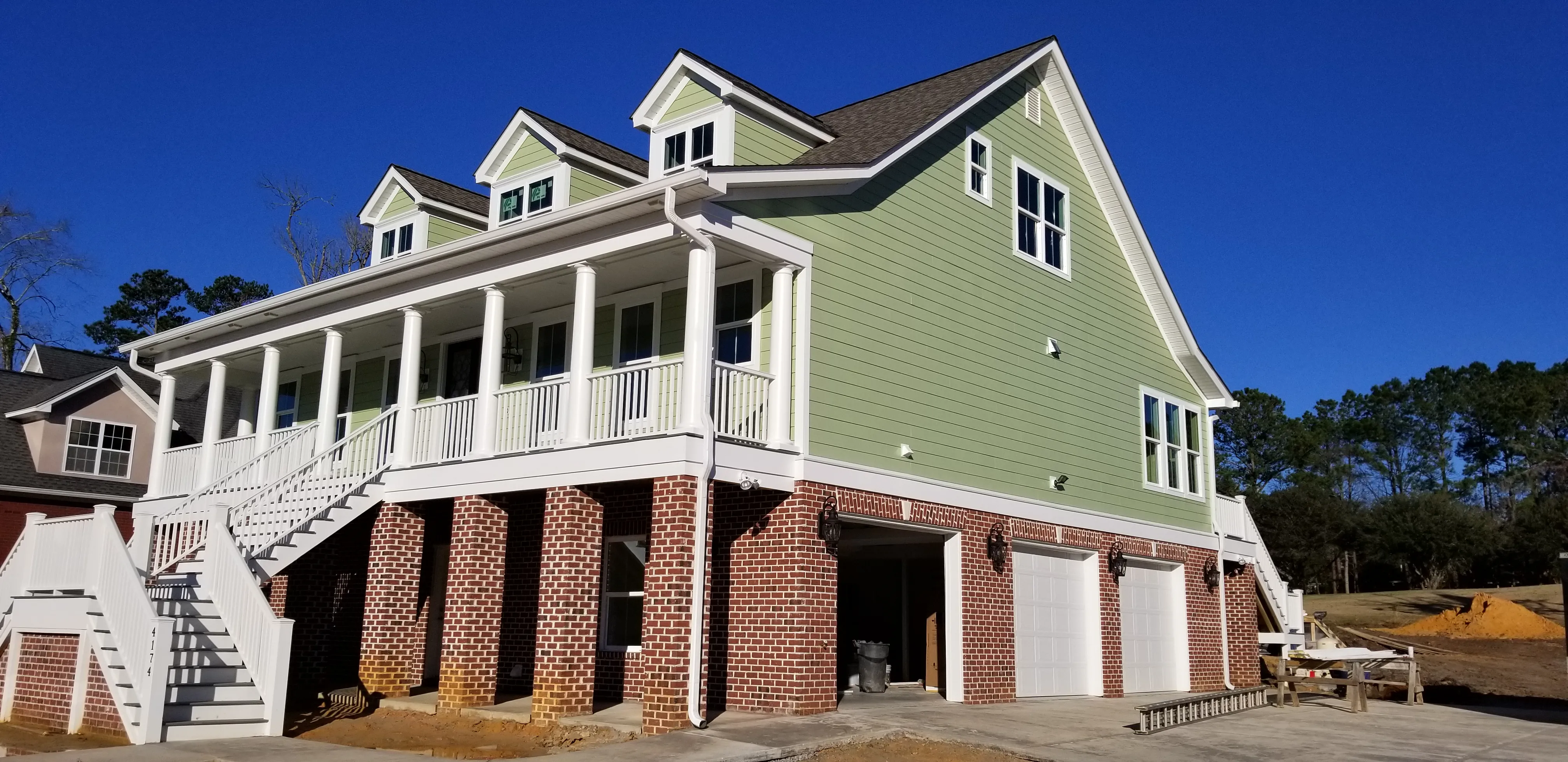
Fiber cement pays back best on paper. In the 2025 Cost vs Value report from the Journal of Light Construction and Zonda, fiber cement siding replacement in the South Atlantic region cost $19,628 and added $23,394 in resale value, or 119.2% recouped. Vinyl in the same region cost $16,491 and recouped 94.9%. In the Charleston market alone, vinyl siding replacement cost $16,386 and recouped 90.9%.
How the Charleston numbers compare with national averages
Nationally, the 2025 Cost vs Value national report lists fiber cement at $21,485 with $24,420 in resale value (113.7% recouped) and vinyl at $17,950 with $17,313 in resale (96.5%). So siding replacement cost in Charleston runs a little under the national average for both materials, and the Charleston and South Atlantic page shows the same pattern: fiber cement costs about $3,100 more than vinyl in the region and returns more than it costs.
Those figures describe one defined sample project, a mid-range siding job on a set house size, not your house. A two-story home in Mount Pleasant with lots of gables and trim costs more than a ranch in Summerville with long, flat walls. Rotten sheathing, extra window trim, and haul-off of old layers move the price more than the panel choice does.
Vinyl vs fiber cement vs wood at a glance
Wood has no line in the 2025 Cost vs Value report, so its cost cells say so rather than guess.
| Factor | Vinyl | Fiber cement | Wood (cedar or similar) |
|---|---|---|---|
| 2025 job cost (Cost vs Value) | $16,386 Charleston market; $16,491 South Atlantic | $19,628 South Atlantic; $21,485 national | Not in the report |
| Cost recouped at resale | 90.9% Charleston; 94.9% South Atlantic | 119.2% South Atlantic; 113.7% national | Not in the report |
| Upkeep | Wash it; no paint needed | Repaint at some point; caulk joints | Regular paint or stain, caulk and rot checks |
| Wind | Depends on the product's rating and the nailing pattern | HZ10 line engineered for hurricane-force winds | Holds well when nailed right; boards can split |
| Moisture | Won't rot, but traps water if the wrap and flashing are poor | Won't rot; edges need paint and proper clearances | Rots where paint fails or water sits |
| Termites | Not food for termites | Not food for termites | Food for termites, including Formosan |
| Odds of BAR approval on the peninsula | Low on historic buildings | Case by case | Highest on historic buildings |
What humidity and wind-driven rain do behind siding
Siding sheds most water, but not all of it. In a city that averages about 52.48 inches of precipitation a year, with August the wettest month at about 7.0 inches according to NOAA normals for Charleston International Airport, some water always gets behind the panels. Whether it drains out or sits there decides how long the wall lasts.
Where Charleston walls actually fail
When we pull old siding off houses in West Ashley or on James Island, the panels are rarely the problem. The damage sits underneath, and it shows up in the same three places on most houses:
- Rotted plywood or OSB sheathing below windows and at the bottom course near the ground.
- Walls with no house wrap at all, or wrap that was torn and never taped.
- Window and door openings with no flashing tape, so water runs straight off the sill into the framing.
Wind-driven rain pushes water sideways and upward through laps and J-channel that stay dry in a normal shower. That's why the water management layer matters more than the cladding. A fiber cement wall over torn wrap will rot just as fast as a vinyl wall over torn wrap.

What good water management looks like
House wrap goes on shingle-style, upper sheets lapping over lower ones, with seams taped. Window openings get flashing tape in the right order: sill first, then the sides, then the head, so each layer sheds onto the one below it. Kick-out flashing goes where a roof edge meets a wall. If you're also getting new windows, have one crew do both so the flashing ties together; our window replacement service in Charleston is set up to work alongside siding for that reason.
Vinyl siding in Charleston: where it works and where it doesn't
Vinyl is the cheapest way to re-side a house here, at $16,386 for the Charleston sample project, and it never needs paint. It won't rot and termites don't eat it. Its weak spots in this climate are wind performance on poorly installed jobs and heat distortion near grills and reflective glass.
Vinyl pros on a Lowcountry house
Vinyl comes in a long list of factory colors, and the color runs through the panel, so a scrape doesn't show. Upkeep is a yearly wash to get mildew off the shaded sides. For a rental in North Charleston or a starter home in Ladson, vinyl is a sensible pick.

Vinyl cons and how to avoid them
Wind resistance varies a lot between vinyl products. A thin builder-grade panel and a thicker panel with a reinforced nail hem carry different wind ratings, and either one can blow off if it's nailed too tight or too far apart. Vinyl expands and contracts, so nails belong in the center of the slots with a little play. Get the wind rating in writing.
Heat is the other problem. Vinyl can warp next to a gas grill, and it can distort where sunlight bounces off a neighbor's Low-E window onto one spot of the wall. Keep the grill several feet off the house. Dark vinyl colors also absorb more heat, which matters on west-facing walls in July.
Fiber cement and Hardie HZ10 in the Lowcountry
Fiber cement is a mix of cement, sand and cellulose fiber pressed into boards. It costs more than vinyl, $19,628 for the South Atlantic sample project against $16,491, but it recoups more than it costs at resale. It doesn't burn easily, doesn't feed termites and holds paint well. For most homeowners who plan to stay put or sell in a few years, it's the material we'd point them to first.
What the HZ10 line is built for
James Hardie sorts its siding by climate zone. According to James Hardie's zone system page, the HZ10 line is engineered for hurricane-force winds, salty coastal air and humid southern heat, which is a fair description of Isle of Palms and Folly Beach in August. Hardie siding carries a 30-year limited, transferable, non-prorated warranty from James Hardie, meaning it moves to the next owner and the coverage doesn't shrink each year.

Fiber cement and termites
Termite pressure is heavy here. Clemson Cooperative Extension reports that South Carolina has eight termite species, and that the Formosan subterranean termite, introduced to the state in the 1950s, is most concentrated in coastal areas from Charleston south to Beaufort. Formosan swarmers are about 1/2 inch long and golden brown. Fiber cement doesn't feed them the way wood siding does, though termites can still travel behind any siding to reach the framing, so keep soil and mulch off the bottom course and keep the termite bond current.
The downsides of fiber cement
The boards are heavy, so labor costs more than vinyl. Factory-finished boards still need repainting at some point, and cut ends need sealing before they go up. Fiber cement also shouldn't touch a roof surface or sit tight against the ground, because the bottom edge wicks water.
Wood siding and the peninsula's Board of Architectural Review
Wood is the right answer for many historic buildings downtown and the wrong one for most other houses here. It needs regular paint and rot checks, and termites eat it.
Who needs BAR approval
The City of Charleston Board of Architectural Review was established in 1931, and according to the Preservation Society of Charleston, most properties on the peninsula fall under its purview. The board treats siding, windows and roofing as character-defining materials. If your house is on the peninsula, check BAR requirements before you pick a material, because switching historic wood siding to vinyl is a hard sell there. Fiber cement on a newer or non-historic building gets judged case by case. Off the peninsula, in Hanahan or Goose Creek, the BAR doesn't apply.
Living with wood siding
Wood holds up while its paint film stays intact. Trouble starts at the bottom edge of each board and around window trim, where paint cracks and water sits. Plan on repainting on a regular cycle and replacing rotted boards as you find them.
Signs you need new siding, and repair vs. full replacement
You need new siding when the damage is spread across walls rather than in one spot, or when the wall behind it is wet. A few cracked boards near a downspout call for a repair. Soft sheathing on three sides of the house calls for a full replacement.
Warning signs to check this weekend
- Panels that are loose, missing or flapping after a storm.
- Soft spots when you press on the siding below windows.
- Stains on interior walls behind an exterior wall.
- Warped vinyl or swollen wood boards with soft ends.
- Mud tubes on the foundation or bottom course, which point to termites.
When a repair makes sense
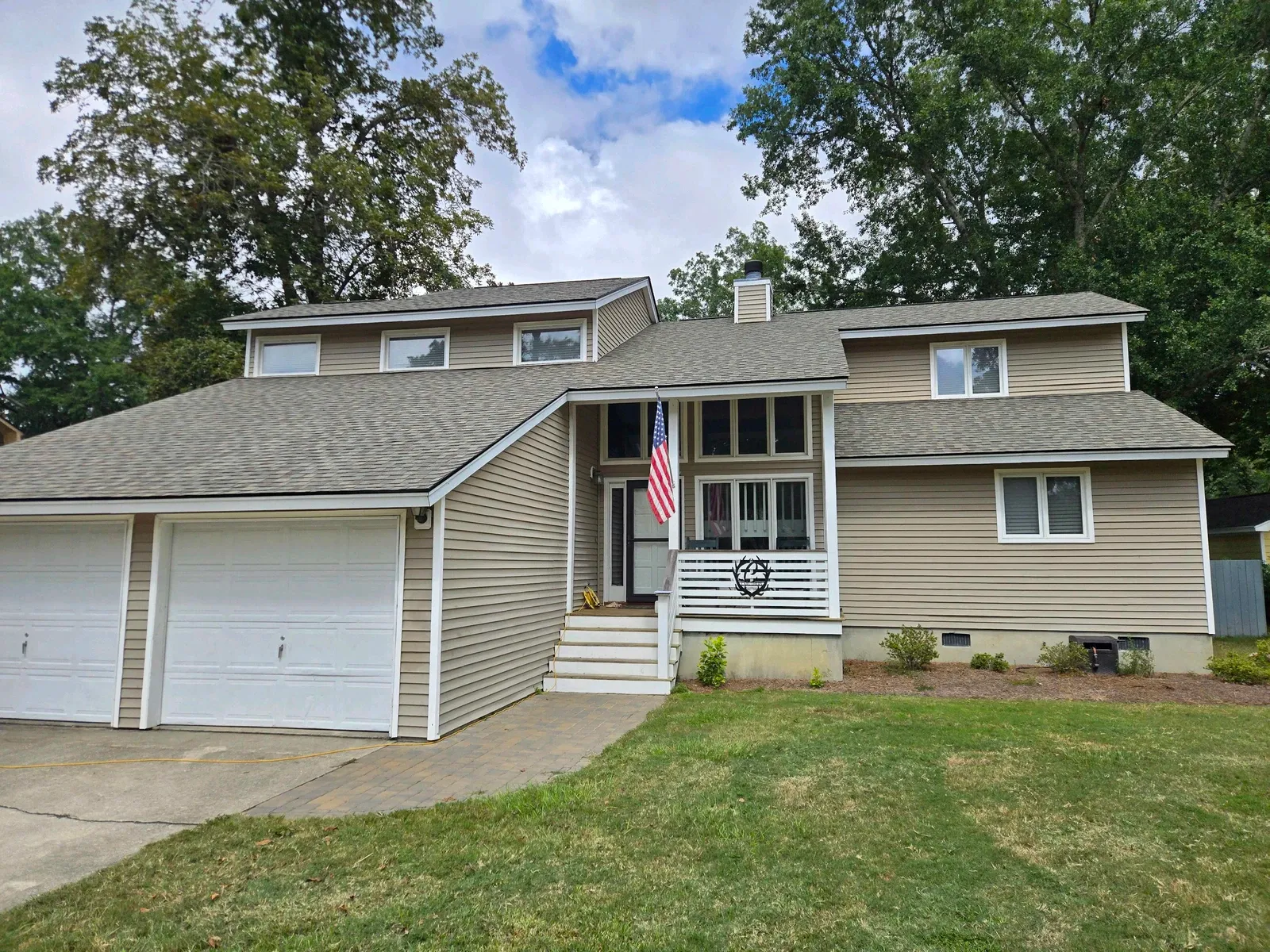
Repair works when the damage is limited to one wall and the sheathing behind it is dry. The catch with vinyl is color match: faded siding won't match a new panel from the same line. Moving old panels from a back wall to the front and putting the new ones out of sight is a common fix.
"Hired ACE to repair exterior siding on my residence. Their team was awesome. From the estimation to the clean up after the project I was extremely happy with their work. Their team on site was friendly and professional."Ken Rosenbaum Jr, Google review
When full replacement is the better call
Full replacement makes sense when the sheathing is soft in several places, when there's no house wrap, or when you're also replacing windows. Cheryl Caruthers wrote that her project "included two new windows, a sliding glass door, and complete siding replacement," and that "working with JR was extremely easy." Our siding contractor page covers what that kind of job involves. If the rot has reached the studs or a sill plate, that's framing work, which falls under general construction in Charleston and should be priced before the new siding goes up.
Siding styles and colors for Lowcountry homes
Most houses around Charleston use horizontal lap siding as the main wall, with board-and-batten or shake as an accent. All three styles come in vinyl and fiber cement, so the look and the material are separate choices.
Lap, board-and-batten and shake
Lap siding is the standard on Lowcountry houses, including new builds in Summerville and Moncks Corner. Board-and-batten, with tall vertical boards and narrow strips over the seams, suits farmhouse-style homes and porch gables. Shake siding fits gable ends and dormers. One style on the main walls plus one accent is usually enough.
Picking colors that hold up
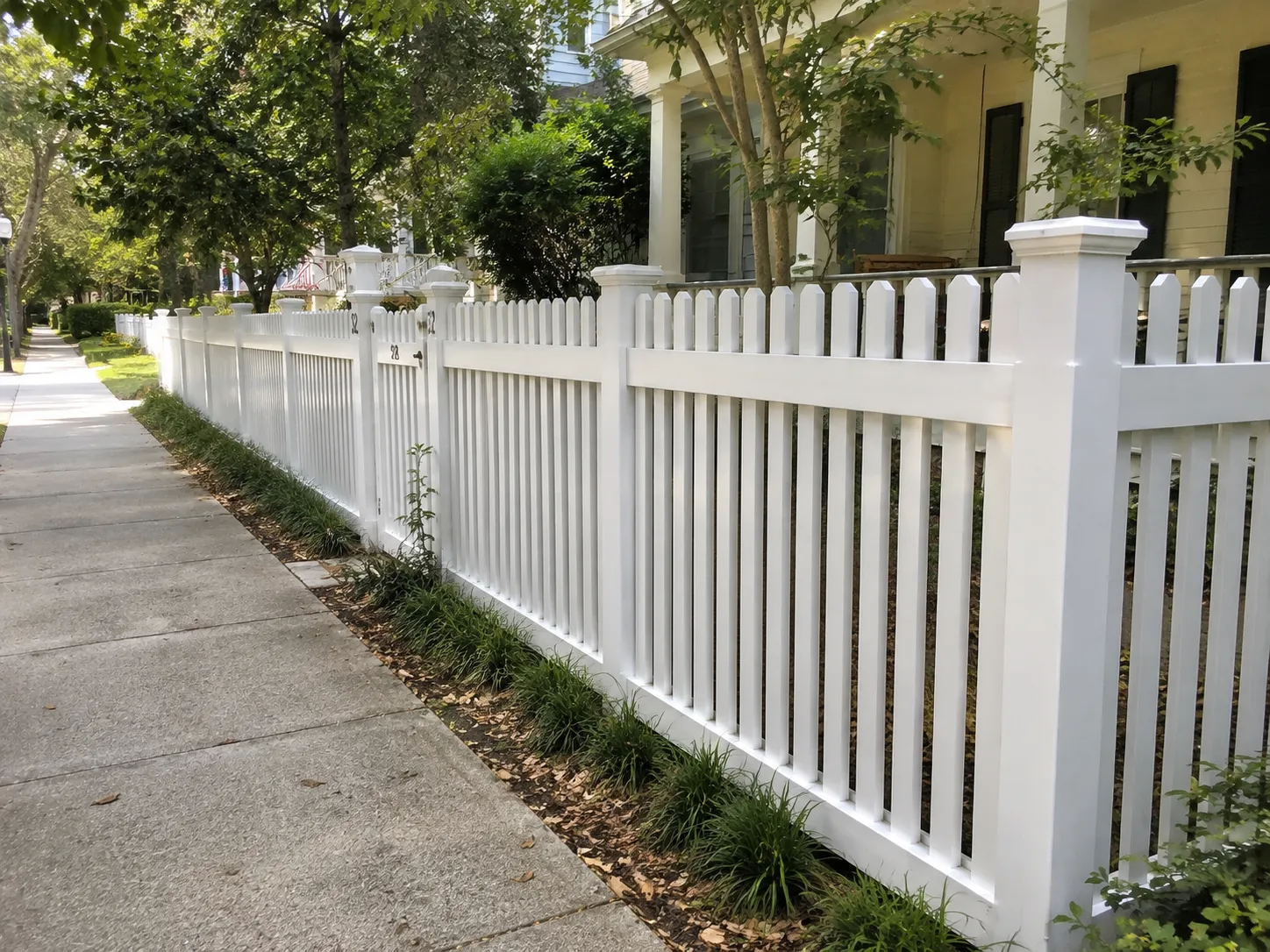
Soft greens, grays and off-whites with white trim are common across Charleston County. Lighter colors stay cooler on sunny walls, which helps vinyl avoid heat distortion. Check HOA rules first, since many limit colors. Browse the American Custom Exteriors project gallery for real combinations, then hold samples against the house in morning and afternoon light.
What should a siding quote include?
A good siding quote lists the water management work line by line, not only the panels. Most low quotes leave out sheathing repair; ask for a per-sheet price in writing.
Line items to look for
- Tear-off of existing siding and disposal of the old material.
- Sheathing replacement, with a per-sheet price for rot found after tear-off.
- New house wrap, lapped and taped, covering every wall.
- Flashing tape at every window and door opening, and kick-out flashing at roof-to-wall joints.
- Trim boards at corners and openings, with the material named.
- J-channel around openings and starter strip at the bottom course.
- Brand, product line, color and wind rating of the siding.
- Permit handling and final cleanup, including a magnet sweep for nails.
Questions to ask before you sign
Ask who does the work, and how a change gets priced if they find rotten framing. Ask whether the manufacturer's warranty requires specific installation steps. American Custom Exteriors gives free on-site consultations and estimates, and pricing, materials and timeline are approved before any work starts, whether the house is in Mount Pleasant, elsewhere in Charleston County, or up in Berkeley County towns like Goose Creek and Moncks Corner.
Siding is one of several storm-season decisions. If your roof is near the end of its life, read our comparison of metal roofs vs. shingles in Charleston. If the windows are original, our guide to window replacement cost in Charleston covers impact glass and pricing.
Frequently asked questions
What is the best siding for Charleston SC homes?
Fiber cement is the best fit for most houses. It won't rot, doesn't feed termites, and the James Hardie HZ10 line is engineered for hurricane-force winds, salt air and humid heat. Cost vs Value 2025 shows it recouping 119.2% of its cost in the South Atlantic region. Vinyl is the budget pick, and wood suits historic peninsula homes.
How much does siding replacement cost in Charleston?
Cost vs Value 2025 lists a vinyl siding replacement in the Charleston market at $16,386 and a South Atlantic fiber cement job at $19,628. Those are sample projects. Your price depends on wall area, number of stories, trim details, rotten sheathing found after tear-off, and how many old layers have to come off and go to the dump.
Is vinyl or fiber cement siding better in a humid climate?
Neither rots, so both handle humidity. Fiber cement holds up better against heat and termites and pays back more at resale. Vinyl costs less and needs no paint. In this climate the bigger factor is what sits behind the siding: taped house wrap and proper flashing at windows decide whether the wall stays dry.
Can I put vinyl siding on a historic house in downtown Charleston?
Most peninsula properties fall under the City of Charleston Board of Architectural Review, which was established in 1931 and reviews siding as a character-defining material. Replacing historic wood siding with vinyl is unlikely to be approved. Talk to the BAR staff before ordering any material for a peninsula house.
Does fiber cement siding stop termites?
Fiber cement doesn't feed termites the way wood siding does. That matters here, because Clemson Extension reports Formosan termites are most concentrated from Charleston south to Beaufort. Termites can still reach the framing behind any siding, so keep mulch and soil off the bottom course and keep your termite treatment current.
Should I replace windows and siding at the same time?
If both are near the end of their life, yes. Doing them together lets one crew tie the window flashing into the new house wrap, which is where most wall leaks start. It also means one tear-off, one cleanup and one set of trim details instead of cutting into new siding later to swap a window.
Get a siding estimate for your Charleston-area home
American Custom Exteriors installs vinyl and fiber cement siding in Charleston, Berkeley and Dorchester counties. We'll look at the walls, check for rot, and give you a free written estimate with every line item listed. Call Monday through Saturday from 7:00 AM.
Call 843-518-9923Request a free estimateSources
- Journal of Light Construction and Zonda, Cost vs Value 2025, Charleston, SC and South Atlantic
- Journal of Light Construction and Zonda, Cost vs Value 2025, national averages
- Extreme Weather Watch, Charleston, SC average rainfall by month (NOAA 1991-2020 normals)
- James Hardie, HardieZone system
- Clemson Cooperative Extension, Formosan termites increase distribution in SC
- Preservation Society of Charleston, Board of Architectural Review
